


Before you go
Hyperia City Prerelease Date and Preparation
- Hyperia City prerelease begins October 16, 2026, with general release October 23. Reserve a place with your local store through Ravensburger Play Hub.
- The prerelease box includes six boosters, four damage dice, one randomly selected promo and a city map. The announced box contents don’t establish your store’s entry fee or prize support.
- Before paying, ask which format the store is running, when deckbuilding starts, what the entry includes and how long the event should last.
- Bring sleeves, a way to track lore, and counters you can clearly distinguish from damage. Ink drops are a separate resource, so using the same loose dice for both without an explanation invites mistakes.
Choose the event
Hyperia City Sealed and Pack Rush
- Sealed: Build a 40-card deck from your six boosters. You may use all six inks, and the usual four-copy limit doesn’t apply.
- Pack Rush: Shuffle two boosters into a 24-card deck, begin with five cards in hand and two marketing cards in your inkwell, and race to 15 lore. The normal two-ink limit doesn’t apply.
- These are different games. Confirm the format before opening your packs, and follow the organizer’s instructions about which materials belong in your pool.
New resource
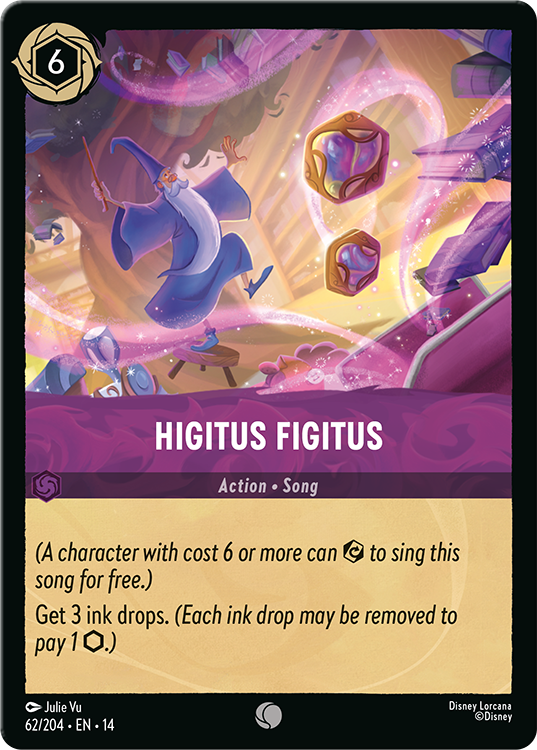
Hyperia City Ink Drops
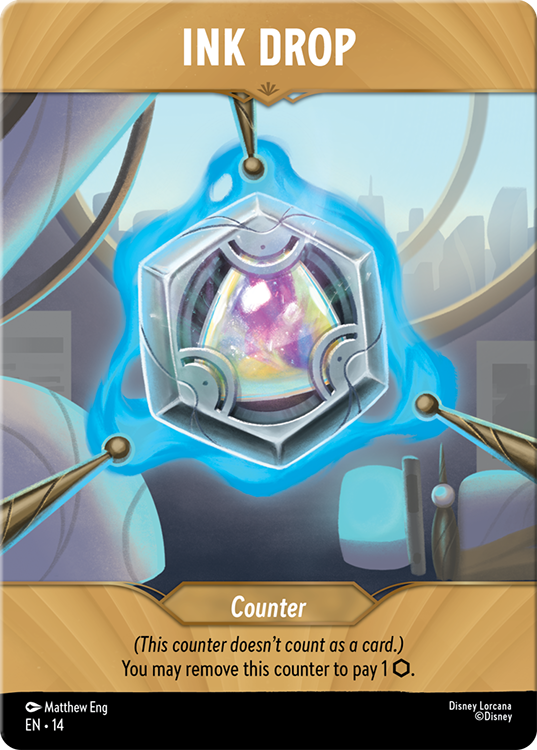
- Ink drops are counters outside your deck. An effect must give you one; you can’t simply add them when making your normal ink play.
- Remove a drop to pay 1 ink, as explained in Ravensburger’s ink-drop rules. You can combine drops with ink cards, but a spent drop is gone. It doesn’t ready for another use.
- For example, three ready ink cards plus one drop can pay a four-ink cost. Afterward the drop is gone, so next turn’s budget doesn’t automatically include it.
- Higitus Figitus gives you three drops. Singing it requires one ready character that is allowed to sing and counts as cost 6 or more; Singer can change that singing cost. Newly played characters normally can’t sing. The singer becomes exerted, so you give up its quest or challenge unless you can ready it again.
- Plan the complete turn before spending drops. A small play that uses your last drop may prevent the larger play you wanted afterward, and one-use ink is not a reason to fill your deck with cards you otherwise can’t afford.
Read the condition
Stone by Day and Forced Questing
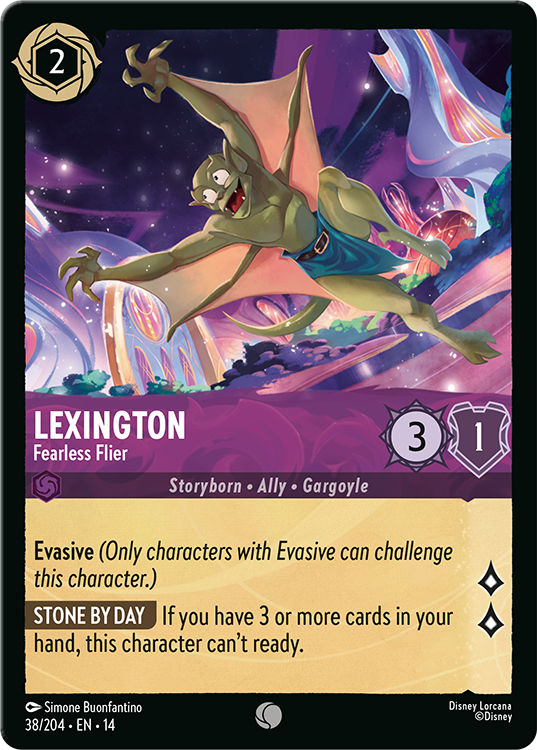
- Stone by Day prevents a character from readying while you have three or more cards in hand. The condition is checked when the ready effect would happen.
- If you have three cards in hand during your ready step, you don’t get to play a card first to unlock that normal ready. A later ready effect may work after your hand becomes smaller.
- Mickey Mouse, Best in Town can’t challenge and must quest if able. At the end of your turn, his Hot Dog! ability gives each player an ink drop if he is exerted. Singing can leave him exerted instead of questing, but he doesn’t qualify to sing Higitus Figitus without a separate effect raising his singing cost.
- Don’t read “must quest if able” as permission to ignore the normal restrictions on a new or exerted character. If another legal action already exerted him, he can’t also quest without a way to ready him.
- In a close game, ask what an extra drop lets your opponent do. Two lore now may be worth it, but the shared resource deserves a place in the decision.
Six-pack reality
What You Can Expect to Open

- The official gallery has 204 regular cards: 72 common, 54 uncommon, 48 rare, 18 super rare and 12 legendary. Alternate treatments don’t create additional different playable cards in that count.
- Six 12-card boosters give you 72 cards before the promo. Earlier official Ravensburger boosters list six common, three uncommon, two rare-or-higher and one foil slot per pack. If Hyperia retains that structure, 54 of your 72 booster cards come from common and uncommon slots.
- A specific common: roughly 41% in six packs in our model. A specific uncommon: roughly 29%. Those are chances of at least one copy in the modeled nonfoil slots, not a promise that you will open either card.
- The model assumes the earlier six-common/three-uncommon structure continues, equally likely cards within each rarity, no repeated card within that rarity’s slots in one pack, and independent packs. It excludes foils, promos and special treatments. Hyperia-specific collation and rarity weights were not confirmed, so these are conditional planning estimates, not published factory odds.
- The calculations are 1 - (66/72)^6 for one common and 1 - (51/54)^6 for one uncommon. An independent 100,000-pool sampler was within half a percentage point of each result. Actual pack collation can differ.
- Don’t assign a precise chance to a specific rare or legendary from these counts: we don’t have the distribution among the rare-or-higher slots. A plan needing two named rare cards is a bonus if you open it, not a sensible starting requirement.
- Build around cards that can replace one another. If you miss Kit Cloudkicker, Another Tale to Spin or Khan Transport Delivery may still supply an ink drop. Keep useful early characters and removal alongside that plan; Sealed has no four-copy limit.
Start with your pool
Common and Uncommon Cards Worth Sorting First
| Ink and job | Cards to look for | Why they earn a look |
|---|---|---|
| Amber: songs and protection | Gazelle, Pop Diva (common, 2 ink, uninkable); Max Goof, Music Lover (uncommon, 3 ink); Pete, Suave Showoff (common, 4 ink) | Gazelle sings 4-cost songs. Max counts as cost 5 for songs and quests for 2 lore with another Singer. Pete is a 1/6 Bodyguard that quests for 2, useful for protecting smaller questers. |
| Amethyst: lore and damage movement | Lexington, Fearless Flier (common, 2 ink); Archimedes, Has Had Enough (common, 4 ink); Mim's Malice (common, 2 ink) | Lexington is a 2-cost, 2-lore Evasive threat with a hand-size restriction. Archimedes costs four and quests for 2 without Stone by Day. Mim’s Malice can move damage from a surviving character onto an opposing one. |
| Emerald: an early drop and interaction | Kit Cloudkicker, Irrepressible Bear (common, 3 ink); Go Go Tomago, Extreme Tester (common, 2 ink); Air Drop (common, 4 ink) | Kit is a 3-cost 4/4 that gives you and another player a drop. Go Go quests for 2 and gives you a drop whenever challenged, even if she survives. Air Drop deals 3 damage, or 5 when its target already has damage. |
| Ruby: singers and a late lore threat | Peg, Late-Night Vocalist (common, 2 ink); Meilin Lee, Ecstatic Fan (common, 3 ink); Tadashi Hamada, Making Waves (uncommon, 5 ink); Intimidation Tactics (uncommon, 2 ink, uninkable) | Peg sings 4-cost songs and can become ink. Meilin counts as cost 5 to sing and can give a drop once during your turn when you play a song while she is in play. Tadashi quests for 3 and leaves two drops when banished. Intimidation Tactics can banish a character with strength 2 or less, regardless of its willpower. |
| Sapphire: growth and recovery | Baymax, Qualified Physician (common, 3 ink); Daisy Duck, Savvy Investor (common, 3 ink, uninkable); Everything Else Is Obsolete (common, 3 ink); Hiro Hamada, Pioneering Inventor (common, 4 ink) | Baymax heals up to 2 damage when questing. Daisy moves a card from hand into your inkwell exerted; the song puts one of your top three there exerted. Hiro is a 3/6 that quests for 2 while you have an item. |
| Steel: challenges and removal | Napoleon, Patient Watchdog (common, 3 ink); Baloo, Freight Pilot (common, 4 ink); Edgar Balthazar, Long-Suffering Butler (common, 5 ink); Ink Explosion (common, 4 ink, uninkable) | Napoleon is a 5/2 with Alert to reach Evasive characters. Baloo is a 5/4 with Resist +1. Edgar is a 4/6, quests for 2 and has Resist +2 while undamaged. Ink Explosion deals 4 damage and gives you a drop. |
- Use this shortlist to find a plan in the cards you opened. You can combine all six inks in Sealed, but a card still needs an affordable cost, useful lore or an ability your other cards can support.
- A plain character that fills an empty turn can beat an unsupported synergy card. Keep enough early bodies to stop an opponent questing without resistance, then add the stronger later plays your pool supports.
- An inkable card can become permanent ink in your inkwell. An uninkable card can’t, so keep enough inkable cards to pay for your turns even when your best spells are stuck in hand.
Answer their board
Removal, Evasive Threats and Common Traps
| Card | Good use | Limit to remember |
|---|---|---|
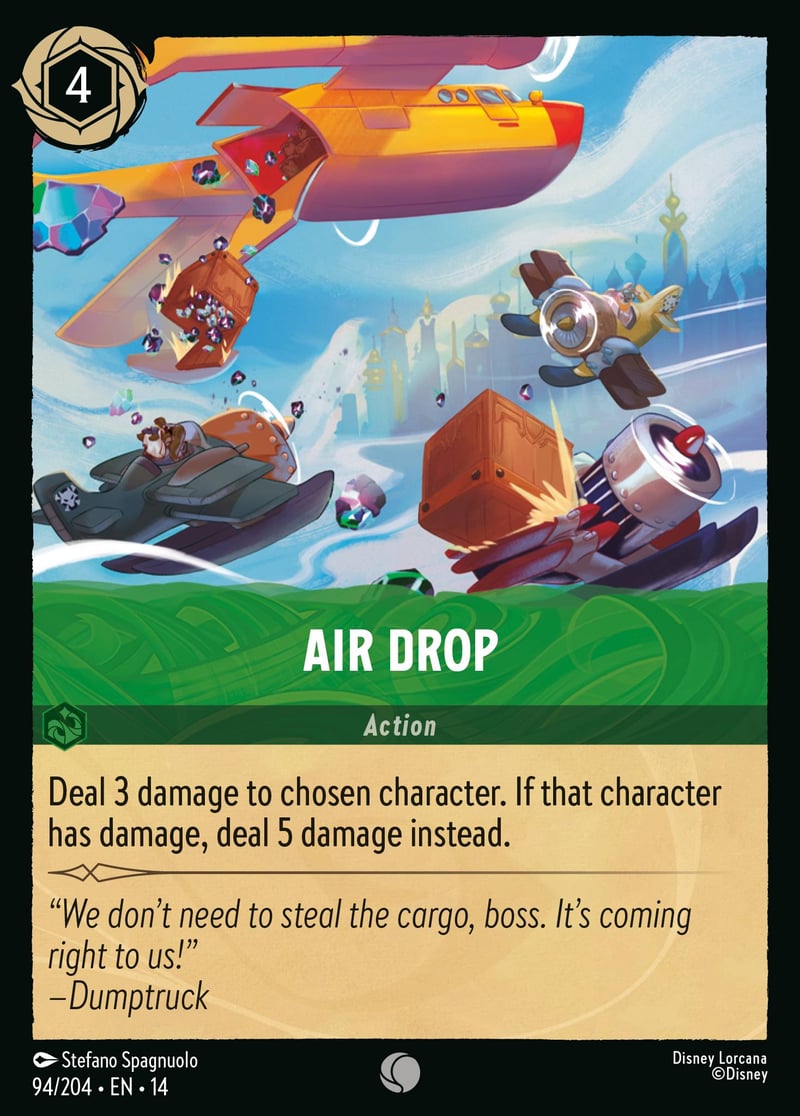
| Air Drop (common, 4 ink) | Finish an already-damaged large character with 5 damage. | An undamaged target takes 3. You need a separate source of the first damage. |
| Ink Explosion (common, 4 ink, uninkable) | Deal 4 damage to a chosen character and keep a drop for another play. | It is uninkable, and Resist can reduce damage. |
| Mim's Malice (common, 2 ink) | After a character survives a challenge, move up to 3 of its damage to an opponent’s character. | No damage on your source means no damage to move. Move it before Baymax removes it. |
| Intimidation Tactics (uncommon, 2 ink, uninkable) | Banish a low-strength engine or quester with high willpower. | It cannot choose a character with more than 2 strength and is uninkable. |
| If She Doesn't Scare You (uncommon, 4 ink) | Trade a character of yours for a dangerous opposing character; a ready character eligible to sing and counting as cost 4 or more can sing it. | You give up your own character too. Choose an expendable one, and respect Ward and other choosing restrictions. |
| Scram! (uncommon, 1 ink) | Remove an opposing character costing 2 or less for one ink. | It becomes extra permanent ink for that player, so this can accelerate the opponent. |
- Archimedes, Has Had Enough (common, 4 ink) and Jock, Enjoying the Sights (common, 4 ink) can keep questing when an opponent lacks Evasive or Alert. They can still be chosen by legal removal effects; Evasive doesn’t grant Ward.
- Napoleon, Patient Watchdog (common, 3 ink) and Lafayette, All Ears (uncommon, 2 ink) have Alert, which lets them challenge as if they had Evasive. Alert doesn’t make them Evasive on defense, and it doesn’t let them challenge ready characters.
- Baloo, Delivery Pilot (uncommon, 2 ink) is a tempting 2-cost 4/4 with 2 lore, but it can’t quest or challenge unless you got an ink drop this turn. A drop saved from last turn doesn’t unlock it. Leave it out if your deck rarely produces fresh drops.
- Edgar’s Resist +2 disappears as soon as he has damage. Don’t assume he keeps reducing every subsequent hit by 2; healing him completely can restore it.
Package one
Singers, Guitar and Songs

- Core: Peg, Late-Night Vocalist (common, 2 ink) or Gazelle, Pop Diva (common, 2 ink, uninkable), Meilin Lee, Ecstatic Fan (common, 3 ink), Ancestral Guitar (common, 2 ink), and songs your pool can use. Peg and Gazelle can sing If She Doesn’t Scare You; Meilin can sing Everyone Knows Juanita for two cards even before you have ten cards in discard.
- Ancestral Guitar draws a card when played. Its activated ability costs one ink and exerts the item to give a chosen character Singer and +2 counted cost for songs that turn. Meilin’s Singer 5 can therefore count as 7 and sing Higitus Figitus, provided she is ready and eligible to sing.
- With a ready, eligible Meilin already in play and Guitar available, pay one ink for Guitar, then sing Higitus: the song gives three drops. If Meilin’s once-per-turn ability hasn’t resolved this turn, it gives another. With that ability available, you spent a character action and one ink to get four single-use drops; if you already used it, this sequence gives three. A song played before Meilin entered play doesn’t use her ability. This is a useful turn sequence, not a promise about your opening pool.
- Without Guitar, Meilin still sings a 5-cost draw song. Without Meilin, Peg or Gazelle plus useful 4-cost songs still work. Don’t add weak songs just to reach a card count.
- Speaker Stack (common, 2 ink) improves Singer characters by +1 strength and +1 willpower. It doesn’t make a non-Singer into a Singer. Miguel Rivera, Promising Musician (common, 3 ink) gains 1 lore when he sings, but has no printed Singer keyword; check his normal cost or use Guitar.
Package two
Generate Drops, Then Choose Whether to Spend Them
- Core: Kit Cloudkicker, Irrepressible Bear (common, 3 ink), Another Tale to Spin (common, 2 ink) and Khan Transport Delivery (common, 2 ink, uninkable) offer different ways to get a drop. Kit and Another Tale also give another chosen player a drop; Khan Transport Delivery only gives one to you. The two draw spells replace themselves, but Delivery is uninkable.
- Madam Mim, Bauble Chaser (common, 1 ink) gains Evasive while you have a drop, and Sir Kay, Determined to Win (common, 5 ink) gains Challenger +3 while you have one. Keeping your last drop can therefore matter more than spending it immediately. Their conditions ask whether you have a drop, unlike Baloo, Delivery Pilot’s fresh-drop condition.
- Wasabi, Future Thinker (uncommon, 5 ink) rewards spending a drop to play him: your other characters gain Resist +1 and Ward until the start of your next turn. The protection doesn’t include Wasabi himself and doesn’t stop challenges.
- Arthur, Novice Blacksmith (common, 2 ink) lets you pay one extra ink on play to get a drop. That banks ink for later; it doesn’t create a free extra resource. If you did not open Kit, a draw-and-drop action can support the same plan without requiring another exact character.
- Keep the deck functional without its drop payoffs. A usable character and a flexible drop source are preferable to several cards that sit idle until the perfect sequence appears.
Package three
Win a Challenge, Then Repair or Move the Damage

- Core: Baloo, Freight Pilot (common, 4 ink) or Sir Pellinore, Tougher Than He Looks (uncommon, 3 ink), backed by Mim's Malice (common, 2 ink) or Baymax, Qualified Physician (common, 3 ink). Baloo’s Resist +1 reduces incoming damage; Sir Pellinore has Challenger +2 and gives you a drop when he banishes another character in a challenge during your turn.
- Suppose your 5/4 Baloo challenges an exerted 3/5 character with no relevant other effects. Baloo deals 5, banishing it; Resist reduces the returning 3 damage to 2, so Baloo survives with 2 damage. Mim’s Malice can move those 2 damage to another opposing character, or Baymax can heal Baloo by questing.
- Do the useful damage movement first if both effects are available. Healing away the damage leaves nothing for Mim’s Malice to move. Don’t attack into a trade expecting to repair a character that has already been banished.
- Without Mim’s Malice, Air Drop can finish something you damaged in a different challenge. Without Baymax, use another durable challenger and accept that you may only get one safe exchange.
Package four
Small Items Supporting Reliable Questers
- Core: Hiro Hamada, Pioneering Inventor (common, 4 ink), Ancestral Guitar (common, 2 ink) and Honey Lemon, Endlessly Curious (common, 1 ink). A Guitar draws on play and keeps Hiro’s 2-lore condition active while the item stays in play. Honey Lemon discounts the next item you play that turn after she quests.
- Prototype Chem Ball (common, 1 ink) is another cheap item, but activating it costs two ink and banishes it. During your turn, its banishment can give a drop and Resist +1 to a chosen character of yours. If it was your only item, Hiro immediately loses his extra lore.
- You don’t need an item rare for this package. A useful item plus Hiro is enough; don’t fill the deck with weak items just to support one Hiro, or keep an item you need to banish solely for an extra lore later.
- Wildcat, Unconventional Mechanic (common, 3 ink) can banish a chosen item when played. Expect an opponent to have that common answer; the package needs playable characters even after the item is gone.
If you open them
Rare Payoffs That Can Change Your Build

- Jousting Match (rare, 3 ink) deals 2 damage, or 5 if you removed a drop to play the action. A drop from Kit or Khan Transport Delivery can enable it. Unlike Air Drop, its bonus asks how you paid, not whether the target was already damaged.
- Héctor Rivera, Gone to Pieces (rare, 4 ink) has Singer 6, so once ready and eligible he can sing Higitus without Guitar. A song in your discard also makes him a 2-lore Evasive threat. He upgrades a song package but is not required for it.
- Merlin, Profoundly Curious (super rare, 4 ink, uninkable) gives a drop on play and draws when questing, providing value without a narrow combo. Protecting a repeat quester is a better reason to include Bodyguard than simply matching ink colors.
- Madam Mim, Resourceful Trickster (legendary, 8 ink) costs eight. Spending a drop to play her draws two cards, and later drop removal can trigger another draw once during your turn. Add her when you can reach eight with credible early defense and resources, not because legendary rarity makes her easy to cast.
- Ariel, Collector of Oddities (legendary, 5 ink) rewards differently named items with cards and extra lore. Count the useful distinct items you actually opened before rebuilding around her. Hiro’s simpler one-item condition remains the fallback when you lack that depth.
- Baymax, Amped Up (legendary, 7 ink) can Shift over a Baymax by removing two drops. You need an existing Baymax and the drops, so this can upgrade the common Qualified Physician without making the two-card sequence your entire deck’s plan.
- Rarity is an opening-frequency label, not a command to play a card. A rare that asks for missing support can be worse for your pool than another common early character.
At the deckbuilding table
Turn Those Cards into a 40-Card Sealed Deck
- First pass: choose about 26 characters and 14 other cards, then adjust for your actual pool. As a starting curve for those characters, try four at cost 1, six at cost 2, six at cost 3, five at cost 4, three at cost 5 and two at cost 6 or more. That totals 26, not an obligation to play weak cards to hit a number.
- Use the other 14 slots for a mix such as five interaction cards, five songs or draw/resource effects, and four useful items or locations. Count each card once: a removal song fills an interaction slot, not two deck slots.
- Check lore as well as strength. Lexington and Go Go offer early 2-lore pressure; Pete, Hiro with an item and Edgar offer later 2-lore bodies; Tadashi can quest for 3. A deck that challenges well but can’t gain lore still needs a way to finish.
- Try to begin with around 30 inkable cards and ten or fewer uninkables as a conservative first pass, then test actual hands. This is deckbuilding guidance, not an official requirement or a proven optimum. Several great uninkable cards may justify a different split.
- For perspective, in a hypothetical 40-card deck with ten uninkables, a seven-card opening hand contains at least three uninkables about 22.8% of the time before any mulligan. With fourteen, it’s about 47.1%. Those exact combinatorial hand estimates don’t by themselves tell you whether a hand is keepable.
- Draw several practice hands and play out turns one through four with legal ink plays. If the same expensive cards keep sitting in hand, replace one with a useful early character before blaming a missing rare.
- Choose one or two packages supported by multiple cards you opened. All six inks are allowed, so you can use a good removal card outside a package without forcing a two-color Constructed shell.
- Ask the organizer whether the promo belongs in your playable pool and whether rebuilding is allowed between rounds. Don’t assume an attractive promo or a Pack Rush rule automatically belongs in your Sealed deck.
At the table
Hyperia City Prerelease Game Plan
- Count the lore your opponent’s characters could earn next turn before deciding to quest with everything. You normally challenge exerted characters. If you need to banish a ready threat, look for an effect that can choose it rather than assuming you can challenge it.
- When choosing a singer, compare the ink saved with the quest or challenge you give up. A character that would earn decisive lore is an expensive singer even when the song costs you no ink cards.
- Track your hand size openly when Stone by Day matters, and announce whether you are spending ink cards, drops or both. Clear resource tracking helps your opponent verify the play and helps you avoid paying twice with the same counter.
- Ask the judge or organizer about an unfamiliar interaction before relying on it. Keep the official release notes available for cases where a short reminder on the card is not enough.
- After your first game, identify the cards you could not cast or the turn when you ran out of useful plays. If the event permits rebuilding between games, make a specific adjustment rather than changing cards only because you lost.
Verified October 9
Hyperia City Prerelease Sources
- Ravensburger’s October 8 prerelease instructions confirm the box, Sealed and Pack Rush formats.
- October 8 Hyperia City release notes explain ink drops, Stone by Day and the pictured cards.
- The official product announcement distinguishes October 16 local-store availability from October 23 general release.
- Official card gallery supplies the 204-card roster, card identities, costs and rarities. Ravensburger’s earlier Reign of Jafar pack listing supplies the six-common/three-uncommon slot assumption; Hyperia-specific collation remains unconfirmed.
- The ink-drop developer explanation supplies additional card interactions. Opening and hand estimates above are labeled models.
- Deckbuilding and turn-planning suggestions are practical judgments, not tournament results, a tested winning list or a guarantee about your store’s event.
- No entry price, guaranteed promo identity or expected card value is assumed. Confirm the actual fee and event details with your organizer.