


Book the right draft
What Is Reality Echoes? Dates and Draft Format
- Magic Presents: Reality Echoes runs October 16 through November 5, 2026. Stores choose their own dates within that window, so look for a specific local listing.
- You draft three Reality Fracture Play Boosters and build your deck from the cards you pick. Pick-Two means you take two cards each time a pack comes to you, then pass the remaining cards as directed by the organizer. An ordinary pick-one draft takes one card at a time.
- WPN lists Casual rules enforcement, with Swiss or single-elimination pairings. Ask your store which structure it’s running and how long to allow.
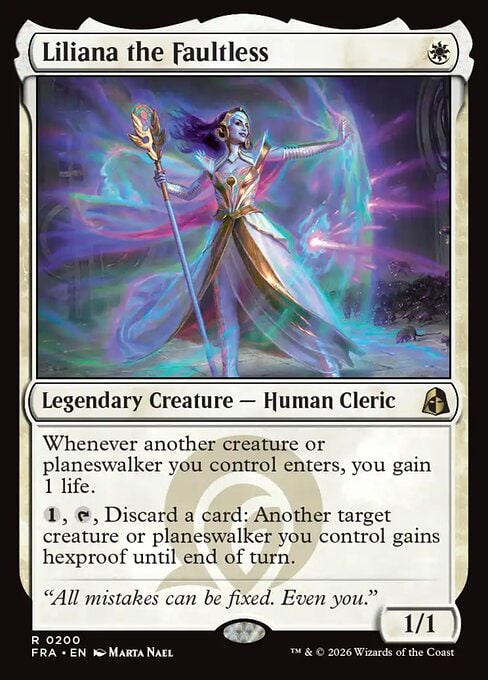
- An Echoed Pair is a specific set of two matching cards from the bonus sheet, usually alternate versions of the same character. Liliana the Faultless and Liliana the Repentant are one example; two copies of the same Liliana aren’t a pair.
- This is a Limited draft event: you build from the cards you draft. You don’t bring a constructed Commander deck or import a pair from your collection.
One pair per game
How Reality Echoes Echoed Pairs Work
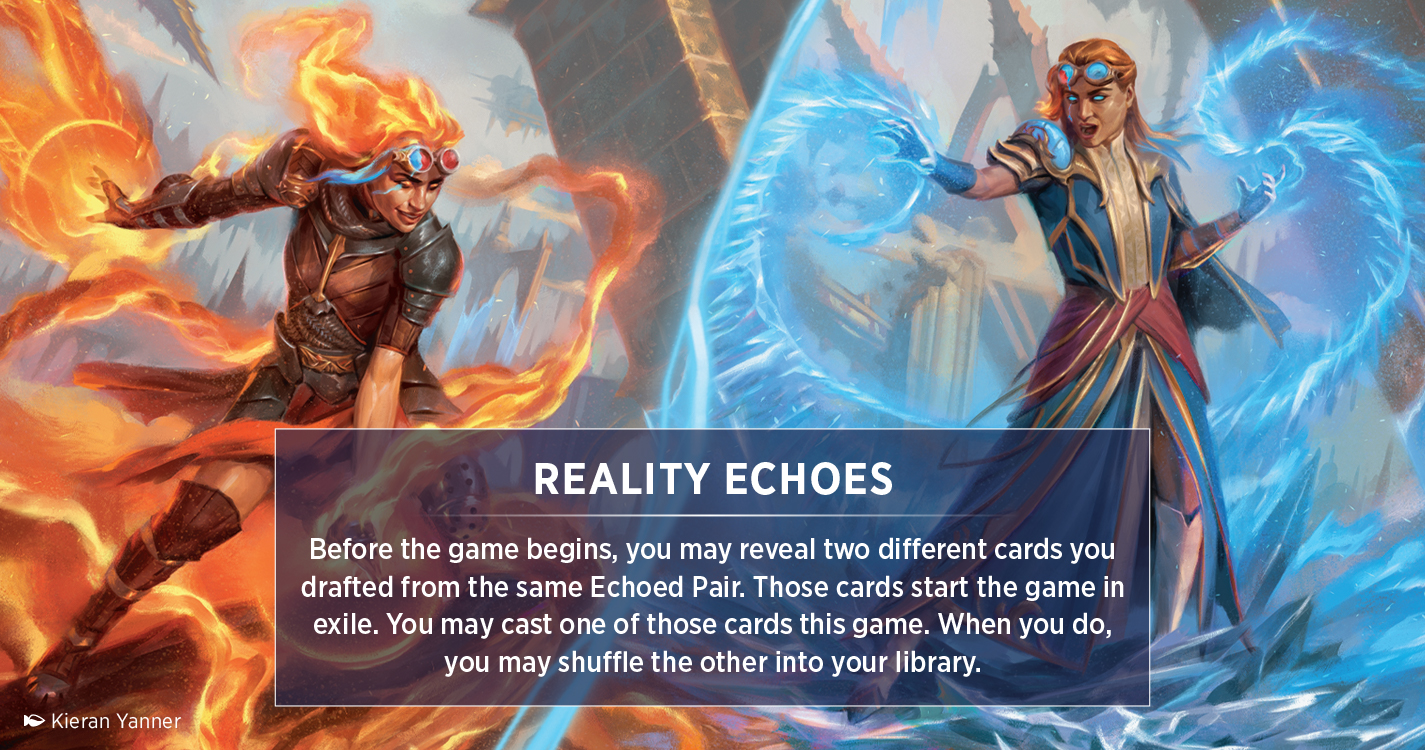
- Before each game, you may reveal two different cards you drafted that form an official Echoed Pair. Those two cards begin that game in exile, a game zone separate from your hand and library.
- During the game, you may cast one member of that pair as though it were in your hand. This permission isn’t a free cast; you still need to pay its costs and follow its normal timing.
- When you cast one, WPN says you may shuffle the other into your library. That choice is optional in the event instructions; don’t tell an opponent the shuffle is mandatory.
- You don’t get to cast both members from exile through this rule. Declining the optional shuffle leaves the partner in exile; it doesn’t give you a second cast.
- Two copies of the same card don’t make a pair. You need the two different counterparts from a specific Echoed Pair.
- If you draft several complete pairs, choose only one as your exiled pair before a game. You can’t start with every pair you drafted in exile.
- You may play without completing a pair. You lose access to the special mechanic, but you’re still allowed to play the draft.
- Keep your chosen pair visible and separate during setup so your opponent knows which cards you chose. If an unusual interaction comes up, ask the organizer how the normal rules apply.
Choose the card your deck can use
Best Echoed Pairs to Look For in Reality Echoes
- Take a pair for the card you want to cast, even if its partner is a different color. Your deck only needs to support the member you plan to cast from exile.
- For example, a black deck can draft Garruk, Veiled Butcher and Garruk, Curse Breaker together. Choose that pair for exile, cast Veiled Butcher when you can pay his five-mana cost, and decline the optional shuffle if the green Curse Breaker would be a card you can’t use.
- Start with Garruk for a five-mana play in black or green, Ajani Unrelenting for a red creature deck, or Kiora of Fire and Ashes for a red Dragon. Fblthp, Impossibly Lost gives a blue deck a cheaper way to draw cards when an attacker gets through.
- This is a pre-event shortlist, checked October 12, 2026. Reality Echoes begins October 16. These are recommendations from card text and the cited community observations, not a measured Reality Echoes result.
- Yoni Skolnik, Reality Fracture’s set design lead, says each pair was designed “To not synergistically go in the same deck during a draft.” In ordinary pick-one Draft, taking one card and passing its partner would otherwise put you and your neighbor into the same strategy.
- That’s a design goal, not a rule that counterparts can never work together. Skolnik calls the two Yoshimarus a borderline case because their +1/+1 counter themes can overlap. In Reality Echoes, check what each half actually does instead of assuming the matching names make a combo.
- Wizards lists 33 uncommon, seven rare and three mythic pairs, with both halves sharing a rarity. There are no common official Echoed Pairs; the common packages below are ordinary deck-building combinations.
- Buying these singles can help you practice, but purchased cards can’t be added to your pool. Only cards you draft at the event qualify.
Mythic pair · black or green
Garruk: A Strong Five-Mana Play in Black or Green
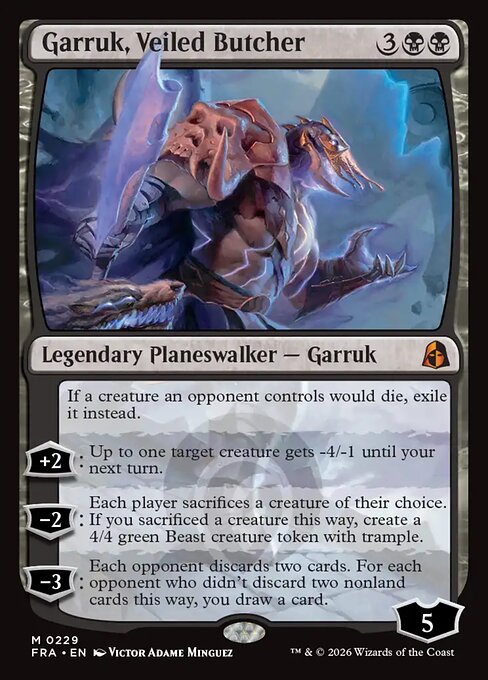
Garruk, Veiled Butcher
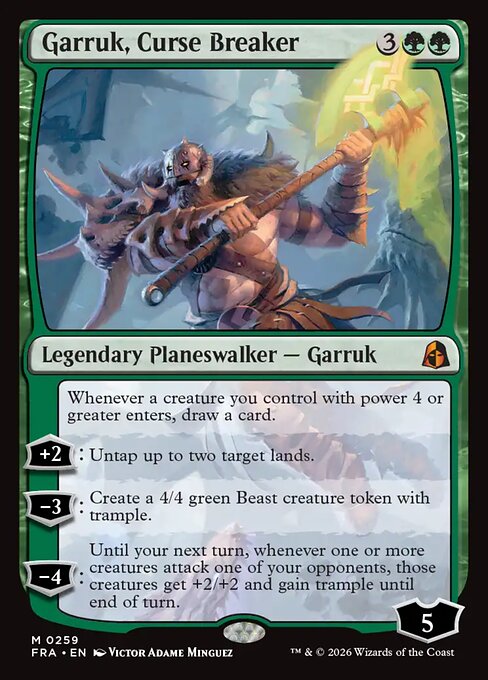
Garruk, Curse Breaker
- Our first choice when the mana works: Garruk, Veiled Butcher and Garruk, Curse Breaker each give you a substantial five-mana play without needing to draw it.
- Choose Veiled Butcher when you need to weaken a creature or attack the opponent’s hand. His +2 gives one creature -4/-1 until your next turn, while his -3 attacks the opponent’s hand and can draw you a card.
- His -2 makes each player sacrifice a creature of their choice. You get the 4/4 Beast only if you sacrificed a creature, so keep a spare creature available rather than call it a free removal spell.
- Choose Curse Breaker when you need a threat or a mana boost. His -3 makes a trampling 4/4 Beast, which triggers his own card draw; his +2 untaps up to two lands.
- A Limited community discussion specifically predicted Garruk would be an attractive first-pick pair. That supports testing him first, but it’s a prediction from one commenter, not a measured Reality Echoes result.
- Both cards require two mana of their own color. A black deck can take the pair to guarantee Veiled Butcher without adding green lands merely to cast the partner.
- If the partner is off-color and uncastable, declining the optional shuffle keeps it out of your library. That avoids drawing a card your lands can’t cast after using the half you wanted.
Mythic pair · red payoff
Ajani: Prioritize Unrelenting in a Creature Deck
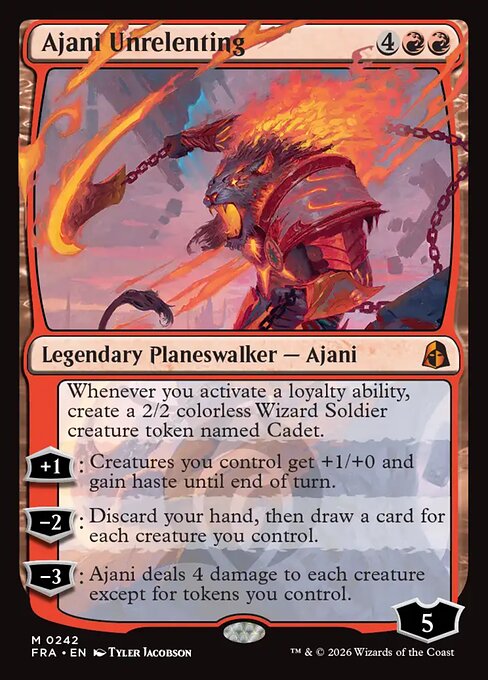
- Take this pair for Ajani Unrelenting when you can support six mana, including two red. His trigger creates a 2/2 Cadet whenever you activate a loyalty ability, including one on a Jace token.
- His -3 deals 4 damage to every creature except tokens you control. It can clear opposing creatures while leaving your Cadets, but your own nontoken creatures are also hit.
- His +1 pumps your creatures and gives them haste. His -2 discards your hand before drawing one card per creature you control, so don’t activate it with a valuable hand and an empty board.
- The October 4 community data review singled out Ajani Unrelenting among the leading individual Draft cards. Its displayed percentage is an early ordinary-Draft observation, not a pair result; a reproducible game sample wasn’t supplied in the post.
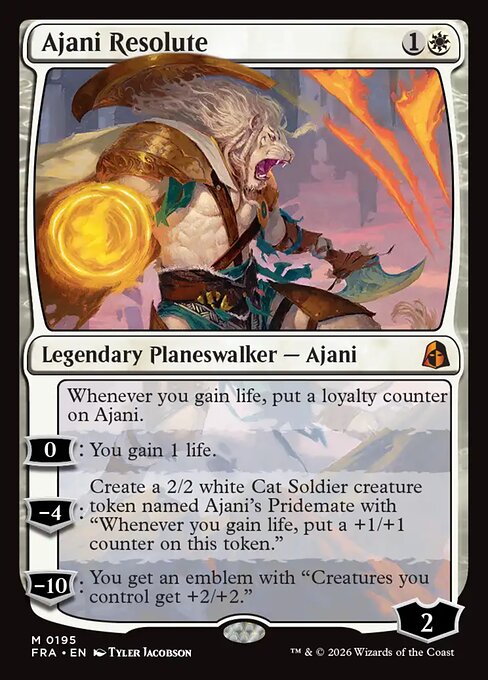
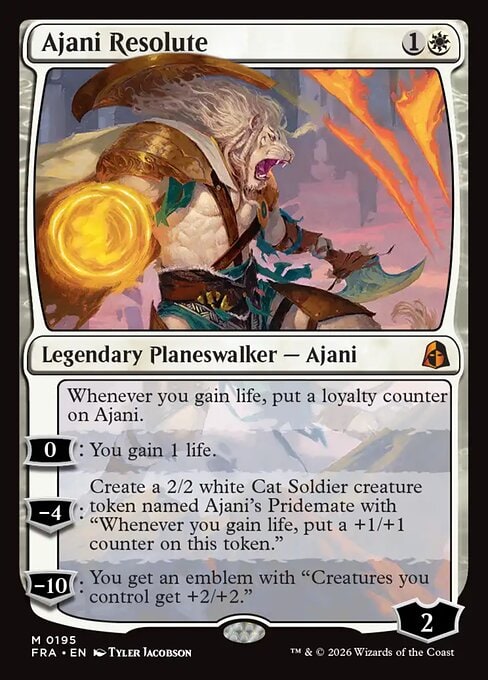
- Ajani Resolute is the cheaper white half, but he needs repeated life gain to build loyalty. Don’t treat the two Ajanis as equally strong without that support.
- Compared with Garruk, Ajani Unrelenting asks for an extra mana and more help from your board. Choose him over Garruk when your red creature and planeswalker deck can exploit those payoffs.
Ajani Unrelenting
Ajani Resolute
Uncommon pair · red or green-blue
Kiora: An Uncommon Dragon Finisher
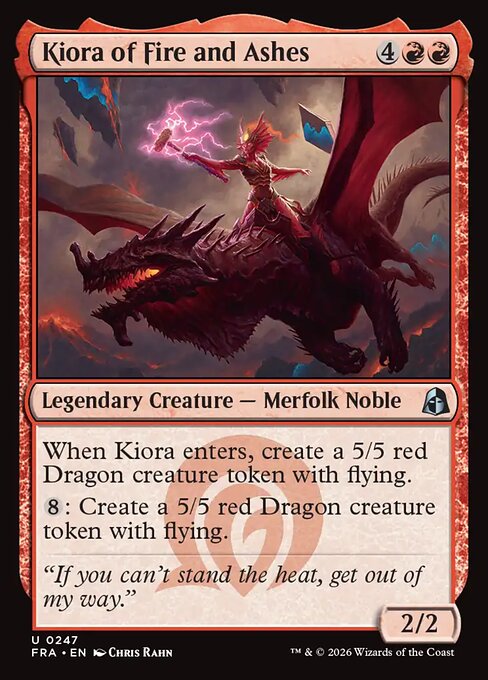
- Kiora of Fire and Ashes is the straightforward payoff: for six mana, including two red, you get Kiora and a 5/5 flying Dragon. The Dragon remains if Kiora is later removed.
- Her eight-mana ability makes another 5/5 flying Dragon. That gives a slower deck something useful to do with excess lands, but you still need early plays and removal to reach that stage.
- The community Draft review calls attention to Kiora’s uncommon power, and another commenter also praises her. That’s a promising signal, not agreement across a large tournament sample.
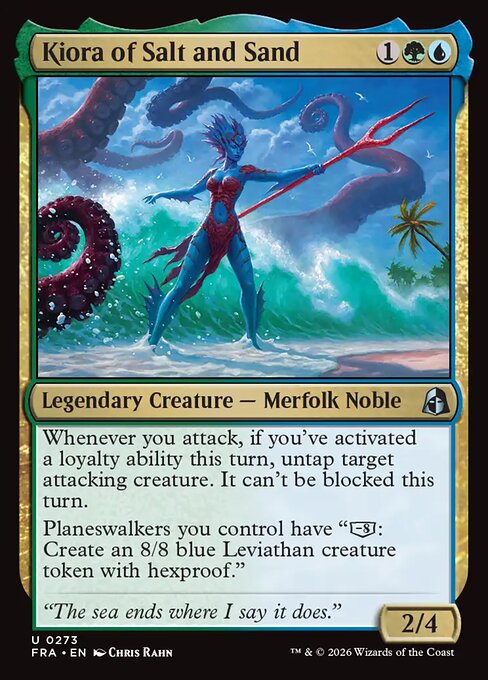
- Kiora of Salt and Sand fits a different deck. After you’ve activated a loyalty ability that turn, her attack trigger untaps one attacking creature and makes it unblockable for that turn.
- With a Jace token and an established attacker, Salt and Sand can help push damage through. She also gives your planeswalkers an ability costing eight loyalty that makes an 8/8 hexproof Leviathan; you must have the loyalty and follow normal loyalty-activation limits.
- Prefer Fire and Ashes when you want a Dragon without needing another card to set it up. Prefer Salt and Sand only when your green-blue deck already has planeswalkers and attackers; completing the pair doesn’t create those pieces for you.
Kiora of Fire and Ashes
Kiora of Salt and Sand
Uncommon pair · cheap access
Fblthp: Card Draw for Blue Decks That Can Connect
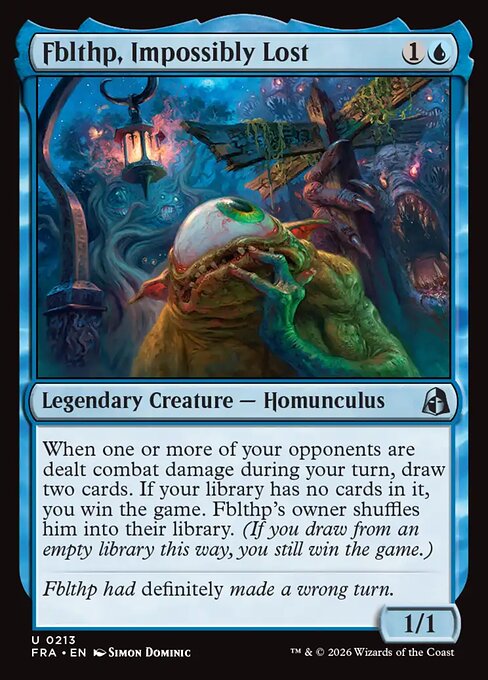
- Fblthp, Impossibly Lost costs only two mana, including one blue. Cast him before combat when another creature can get through: combat damage to an opponent during your turn triggers two cards and shuffles Fblthp into his owner’s library.
- Fblthp doesn’t have to deal that damage himself. Several creatures connecting at once still produce one trigger from that damage event, rather than two cards per creature.
- He’s a 1/1, so this plan can fail if he’s removed before the damage or your attackers are blocked. Choose him when your attackers can reliably get through. Kiora gives you her Dragon immediately, while Fblthp still needs that combat damage.
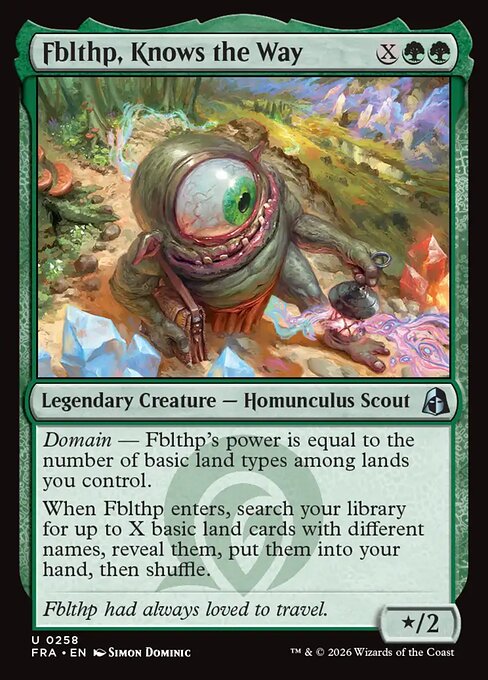
- Fblthp, Knows the Way costs two green plus X. He finds up to X basic lands with different names and puts them into your hand, not onto the battlefield.
- Use the green half when your deck needs basic-land access. For example, X=2 can find an Island and a Forest, but not two Forests; this isn’t immediate two-land ramp.
- Both halves are uncommon. That makes them more plausible draft targets than the mythic pairs, while actual availability still depends on the packs and other drafters.
Fblthp, Impossibly Lost
Fblthp, Knows the Way
Two commons · ordinary deck cards
Protege’s Awakening + Surveillance Phantasm
- This common package gives a blue deck cards and an attacker. It isn’t an official Echoed Pair, so neither card starts in exile through the event rule.
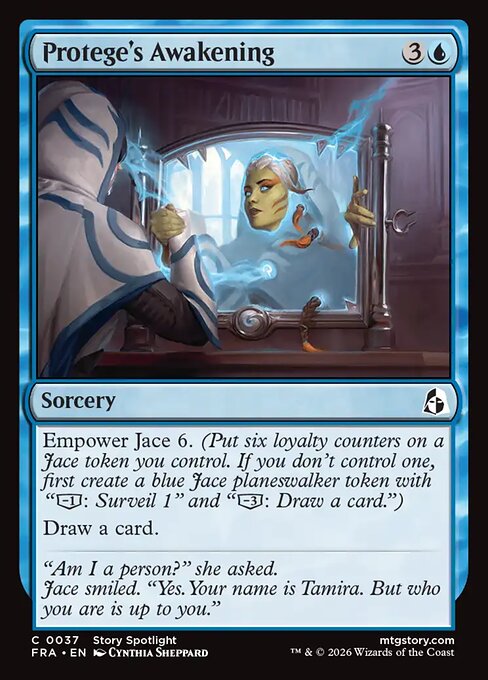
- Protege's Awakening empowers Jace 6 and draws a card. If you don’t control a Jace token, it creates one before adding those loyalty counters.
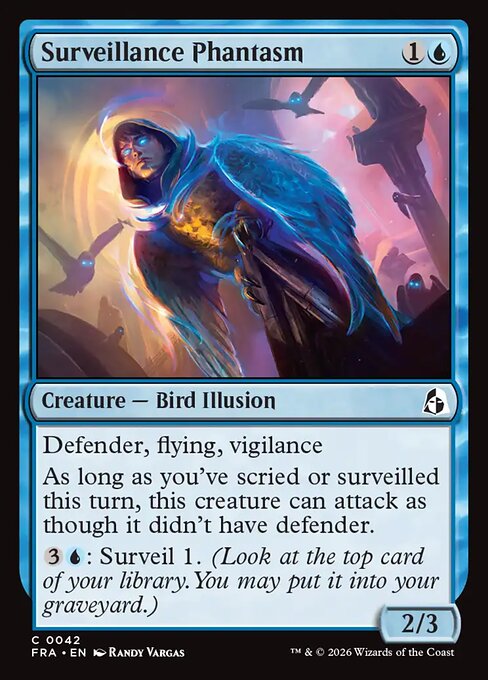
- Activate Jace’s -1 to surveil before combat and Surveillance Phantasm can attack that turn despite defender. It remains a flying, vigilant creature.
- The Phantasm also has its own four-mana surveil ability, so it can attack without Awakening when you have mana to spare. Awakening makes that plan less expensive on later turns.
- These cards fit a blue deck using Fblthp: the Phantasm can help deliver the combat damage he needs. They don’t guarantee an unblocked attack, and drawing the two-card package remains necessary.
Protege's Awakening
Surveillance Phantasm
Two commons · useful interaction
Last Gasp + Rank Rat
- These two commons give a black deck removal and a creature to sacrifice, not an infinite combo or an official Echoed Pair. Each costs two mana, so you can use them while building toward Garruk.
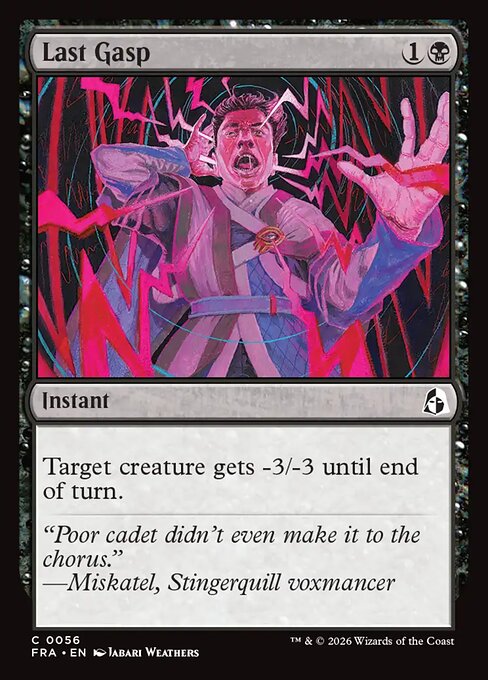
- Last Gasp gives a creature -3/-3 until end of turn. It can remove a small blocker before Fblthp’s combat trigger, or shrink a larger creature so combat finishes it.
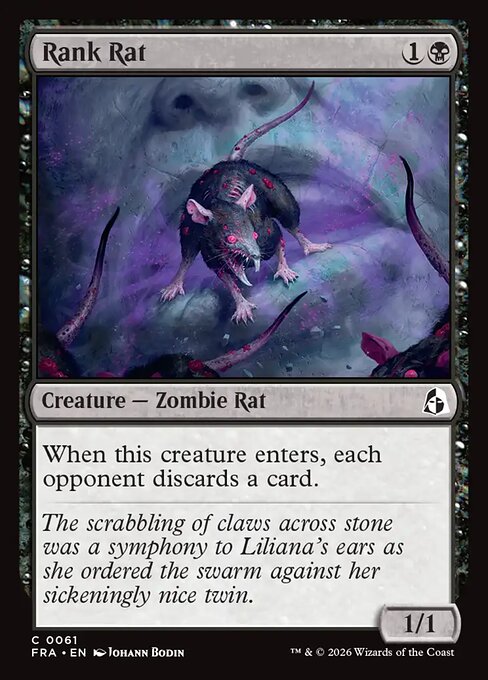
- Rank Rat makes each opponent discard a card when it enters. The opponent chooses what to discard, and an empty hand means there is no card to take.
- After the discard, the Rat is a spare creature for Veiled Butcher’s sacrifice ability. Sacrificing it lets Garruk make his Beast while the opponent also sacrifices a creature of their choice.
- Draft these for their roles and your colors. Two commons are easier to assemble than a mythic pair, but neither this package nor any particular uncommon pair is guaranteed to reach your seat.
Last Gasp
Rank Rat
Pick cards that work together
Reality Echoes Pick-Two Draft Strategy
- Each pack contains three Echoed Pair bonus-sheet cards: a complete pair and one other unpaired card. That third card may find its counterpart in another pack later in the draft.
- You don’t have to take the pair. WPN expressly allows you to take two other cards, or wait for a pair that better fits your developing deck.
- Early in the draft, compare a playable pair with the best two-card alternative in the pack. A pair you can cast is worth more to your game plan than one that forces unreliable colors.
- If your first pack offers a pair outside the colors you want, stay open. Passing it’s legal, and the unpaired card in a later pack can still complete a different pair.
- Once your colors are clearer, use Pick-Two to take cards that support the same plan: a creature and protection, removal and a useful threat, or two cards that help cast your expensive spells.
- Don’t assume the other drafter will pass a counterpart back to you. When a complete pair is already in front of you, choosing to pass one member risks losing the special setup.
- If you reach the last pack without a pair, prioritize one you can realistically cast, but avoid destroying the rest of your deck just to claim the mechanic.
- Use this as draft advice, not a published pick order. A complete pair still has to do more for your deck than the two other cards you could take.
Counterparts matter
Reality Echoes Pair Examples and Common Mistakes
| First member | Its counterpart | What doesn’t qualify |
|---|---|---|
| Liliana the Faultless | Liliana the Repentant | Two copies of Liliana the Faultless. |
| Ajani Resolute | Ajani Unrelenting | Any two unrelated Ajani cards. |
| Tinybones, Pocket Nuisance | Titanbones, Towering Heart | Any two legendary cards you happen to draft. |
- For example, if you draft a lone Ajani Resolute and later receive Ajani Unrelenting, you’ve completed the pair even though the two cards came from different packs.
- If you finish with both the Liliana pair and the Ajani pair, choose one pair for the exile setup before that game. The rule doesn’t give you four cards waiting in exile.
- Shuffling the partner into your library doesn’t put it in your hand. You would need to draw it or use another card effect to get it into your hand before casting it from there.
- The event permission doesn’t waive a card’s colored mana requirements. A powerful card waiting in exile is still awkward if your lands can’t cast it.
- Choose the pair your deck can support, rather than treating the illustration or character name as a power ranking.
Give the pair a working deck
Building a Reality Echoes Draft Deck
- Wizards’ normal Booster Draft rules use a minimum 40-card deck and let you add basic lands. Don’t put every card you drafted into the deck.
- Start with 17 lands and 23 other cards, then adjust for your mana costs and ways to find lands. That’s draft advice, not a separate Reality Echoes rule.
- Keep your colors manageable. A third color is a cost to your ability to draw the colors you need, even when its tempting card starts in exile.
- Don’t fill your deck with expensive cards just because one important spell is available without drawing it. You still need useful plays while you build enough mana.
- Check your chosen pair’s mana costs before settling your lands. Being able to see a spell from the start makes its required colors something you can plan for.
- Bring sleeves, a way to track life and any tokens your cards need. Ask whether your store provides basic lands and whether your entry includes all three draft packs.
- If you’re new to drafting, tell the organizer before the draft starts. Pick-Two gives you two choices at a time; you can still ask for the passing and game-setup instructions to be explained.
Confirm your seat
Reality Echoes Prizes, Arena Reward and Registration
- The supported physical prize is a Reality Fracture set-symbol pin, while supplies last. WPN specifies draft winners, or undefeated players in larger events without one clear winner.
- The player announcement also offers three Reality Fracture packs on MTG Arena to participants who register with a WPN account activated in MTG Arena.
- Ask the store how it records the qualifying account and handles the digital reward. Don’t assume an unlinked account or an informal home draft qualifies.
- Entry fees, extra store prizes, available seats and local start times are store-specific. The publisher’s event window doesn’t establish a universal ticket price.
- Use Wizards’ event locator, then confirm that the listing is Reality Echoes with the special pair rule.
- If you mainly want to try the pair mechanic, book the event rather than buy a box and assume the purchase includes a seat. If you’re organising a home draft, agree on the same rules with your group first.
Evidence
Reality Echoes Rules Sources
- WPN’s Reality Echoes event instructions: October 16 through November 5 window, three Play Boosters, exact pair procedure, optional shuffle, draft choices and prize criteria.
- Where to Play Reality Fracture: the named Liliana, Ajani and Tinybones pairs, event overview and conditional Arena pack reward.
- Wizards’ Booster Draft overview: the ordinary 40-card deck baseline and basic lands. The event’s pair setup is described in the sources above.
- Official pages and card text checked October 12, 2026. The pair shortlist combines editorial reasoning and attributed community observations; it isn’t a tested Reality Echoes win-rate ranking or a card-price assessment.
- Normal Reality Fracture Draft results and community discussion help identify promising individual cards. They don’t measure the special rule that gives you one cast from exile.
- We haven’t verified a tournament-wide Echoed Pair win-rate table or a licensed Reality Fracture game dataset from which to calculate one. Individual-card win rates can’t be averaged into a pair win rate.
- Collecting Reality Fracture and Yoni Skolnik’s set-design article: official pair rarities and why counterparts often serve different draft plans.
- Reality Fracture event-schedule discussion: an individual pre-event Garruk prediction and warnings about drafting both halves.
- SilentBobUS’s October 4, 2026 Draft review and replies: early individual-card observations about Ajani and Kiora, with disagreement over other cards. This is community analysis, not independently reproduced tournament evidence.
- 17Lands public datasets, checked October 12, 2026: Reality Fracture wasn’t listed in the available licensed downloads. No pair win rate has been calculated from an unavailable game file.
- Scryfall’s Reality Fracture card records: exact regular-card names, rarity, costs, Oracle text, artwork and retailer product identity checked October 12, 2026.
- The recommendations above are our pre-event interpretation of card text and the cited Limited discussion. No verified Reality Echoes tournament dataset supports a consistently strongest pair yet.
Keep reading