


Before Pre-Rift
Radiance Dates and Which Rules Apply
- Radiance Pre-Rifts run October 16–22, 2026; the set releases October 23. Confirm your own store’s day, fee and format rather than treating the full window as a single event.
- Riot published these rules and card-text updates on October 9. They take effect October 16, so use them for Pre-Rift rather than applying them to an earlier event.
- Before your first game, learn where Deploy gear can go, when Disarm weakens a unit, and what information Show Off records. The examples below explain those decisions; ask your judge about an interaction your cards handle differently. This is a rules guide, not a full Limited card ranking.
- Keep Riot’s core patch notes, card errata and tournament changes handy. Dates come from the Radiance overview.

Put gear on the board
How Deploy Works in Radiance
- Play gear with Deploy only to a battlefield, rather than to your base. You don’t have to control that battlefield, and an opposing unit’s presence doesn’t by itself prevent the play.
- Your gear is killed when an opponent holds its battlefield. Holding means keeping control into that player’s Beginning Phase; an enemy unit merely being there isn’t the same event. For example, you can play Deploy gear to a battlefield with an enemy unit, but if the opponent later holds that battlefield, you lose the gear. See Riot’s Deploy ruling and the core rules’ Hold definition.
- Before committing the gear, ask whether you can keep the opponent from holding its battlefield. A useful effect now may be worth losing the gear later, but plan for that possibility.
- Playing gear there doesn’t automatically turn it into a unit. If Orianna, Lady of Clockwork makes deployed gear into a unit at an uncontrolled battlefield, it can contest that battlefield; the resulting combat or showdown is handled at the next cleanup when the chain is clear.
- If Orianna turns attached Equipment into a unit, it detaches. You can’t use that animation as a way to keep a unit attached to another unit.
One attack trigger
Disarm Reduces One Enemy Unit’s Might
- Disarm triggers on the unit’s first attack in each combat. It gives an enemy unit at that battlefield the stated Might reduction for the turn.
- It doesn’t continuously reduce every opposing unit, and merely moving a unit is not the stated attack trigger.
- Multiple instances of Disarm add together into one trigger. For example, Disarm 1 and Disarm 2 produce a single Disarm 3 trigger, rather than two separate choices to divide between enemies.
- Choose the enemy whose reduced Might changes the combat. Weakening a unit that was already harmless can waste the mechanic when another blocker is the real obstacle.
- Don’t budget a second reduction from the same unit’s later attack in that combat. The first-attack restriction matters when an effect allows more activity.
Declare the evidence
Show Off Locks In the Qualifying Information
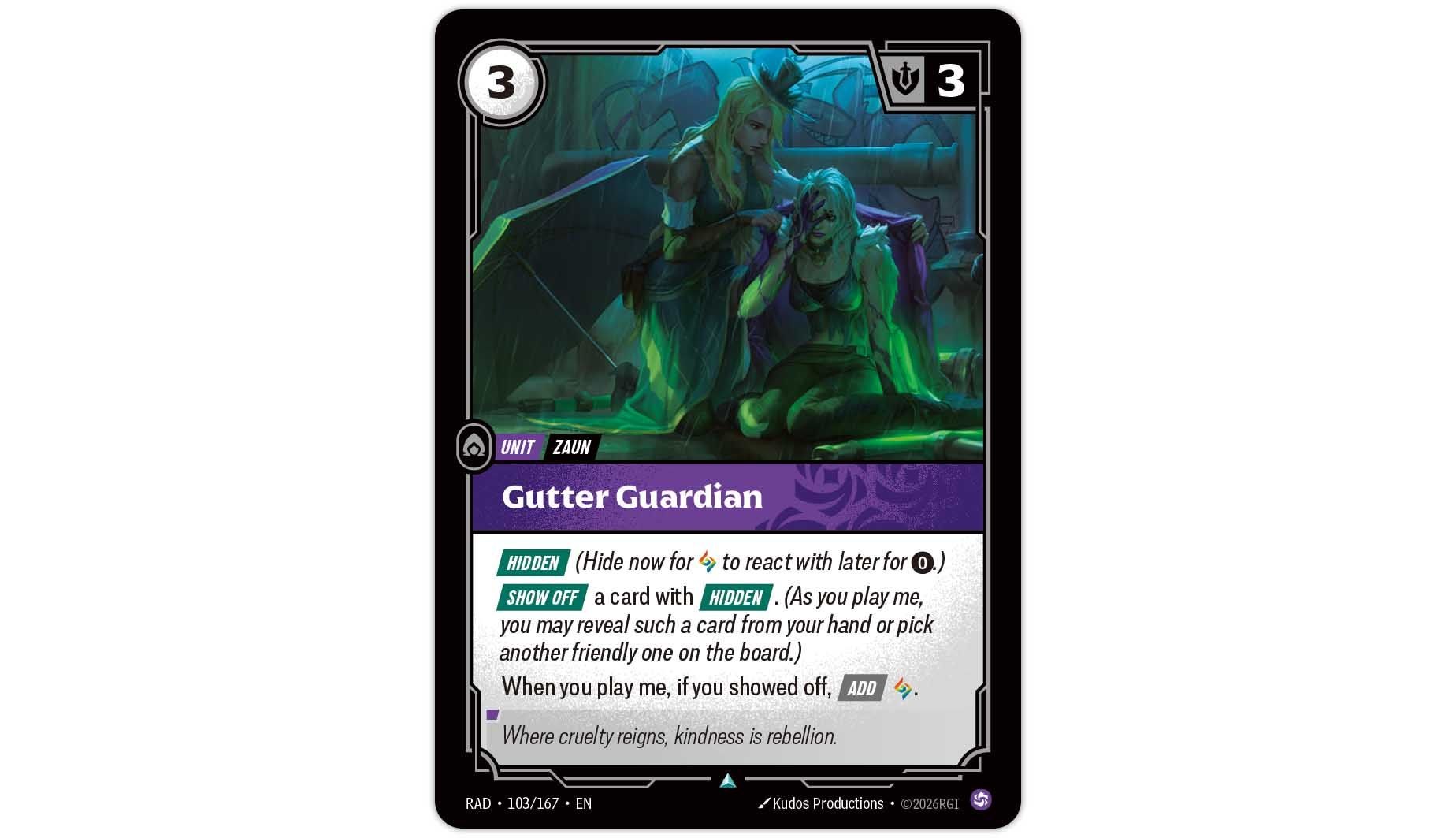
- Show Off can use a qualifying card revealed from your hand or a qualifying friendly object on the board. A board object doesn’t need to be revealed from your hand.
- You can’t point to a facedown card and use its hidden front-face traits. Riot’s Gutter Guardian example specifically rejects that shortcut.
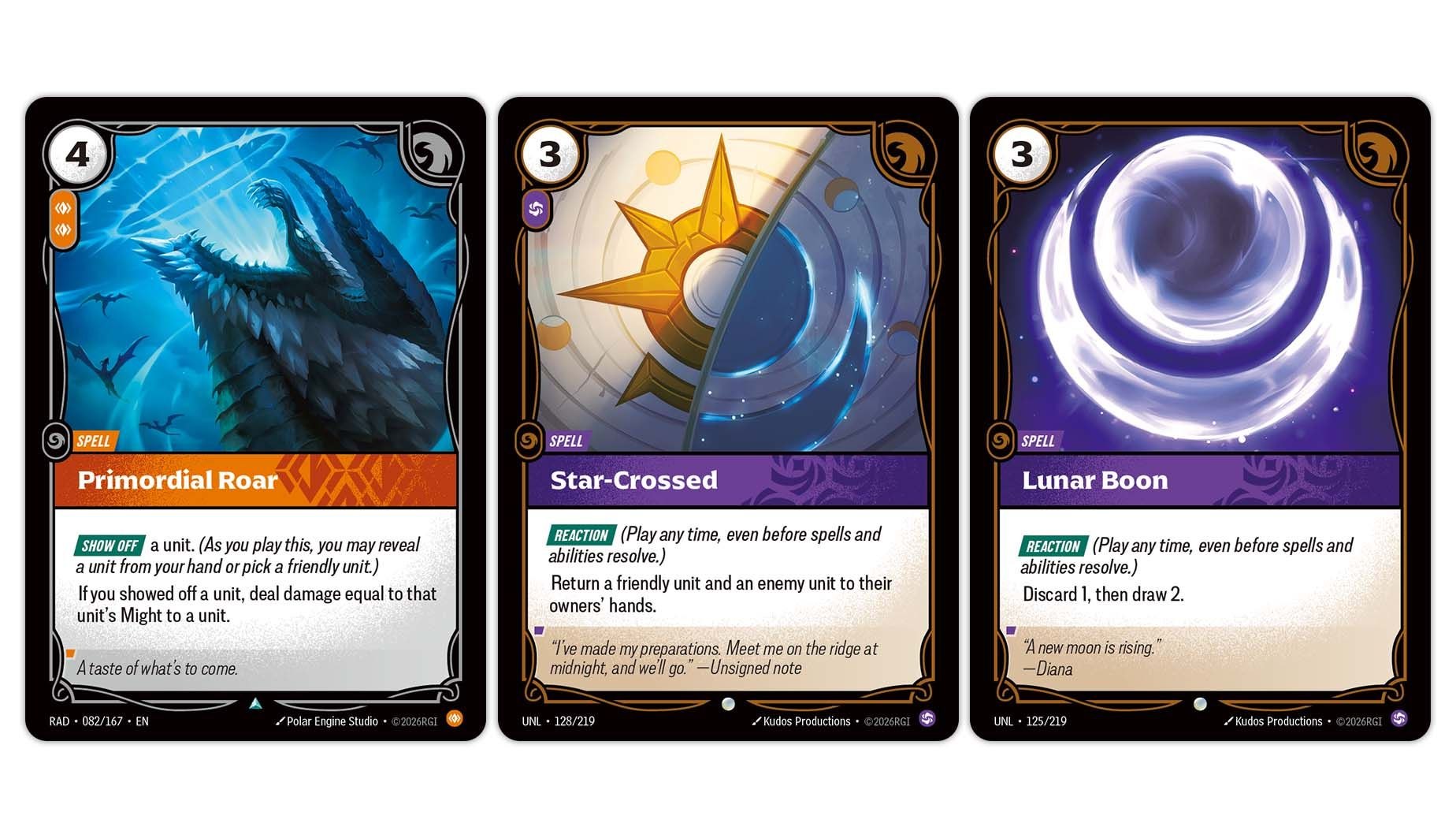
- Record the required information when you Show Off. If you show a unit with 5 Might, that recorded Might stays 5 even if a later response raises it to 8 or returns it to your hand. Riot explains this timing in its Primordial Roar ruling.
- For Primordial Roar, bouncing the shown unit with Star-Crossed or making you discard the shown hand card with Lunar Boon doesn’t undo that locked information. A later Might boost also doesn’t increase the value already recorded.
- Tell your opponent which card or object you’re showing and name the trait the ability needs. For a Might-based effect, agree on that number before either player responds.
Deckbuilding first
Neeko Uses Up to Three Additional Legends
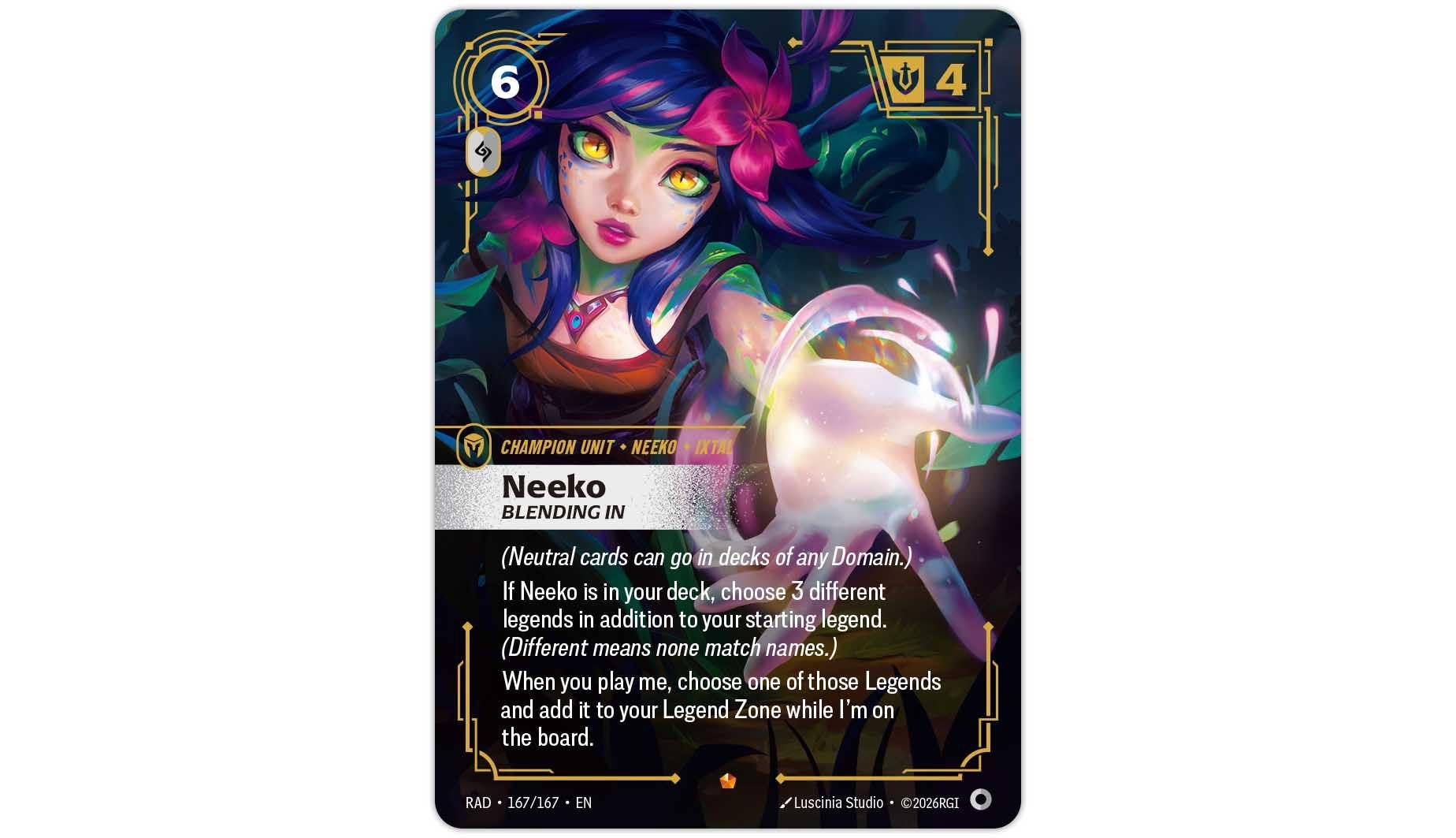
- The explicit new errata for Neeko, Blending In says to choose up to three different additional legends if Neeko is in your deck. None may share a name with another selected legend or your starting legend.
- Choose that pool during deckbuilding if Neeko is in your main deck or sideboard, and register it when required at a competitive event. You don’t choose an entirely new pool whenever you draw another Neeko.
- Multiple Neekos in the deck share those choices. When Neeko’s play effect resolves, add one selected legend ready; you don’t have to reveal it before adding it. You can’t have multiple copies of the same additional legend in the Legend Zone at once.
- When the associated Neeko leaves the board, that added legend ceases to exist. Plan around losing its contribution instead of treating it as a permanent free addition.
- Riot’s same-day patch explanation still describes choosing three; its separately labeled NEW TEXT says up to three. This guide follows the explicit errata. Ask your judge if the current published rules provide a later clarification.
Small wording, real decisions
Other Radiance Interactions to Know
- Elnuk Herd: Its revised text permits a friendly unit, so it may give itself the +3 Might. The old wording required another unit. If played from facedown, the recycle instruction still applies.
- Last Caress: Its permission for the next unit includes playing that unit from facedown. The wording update makes that existing inclusion explicit; don’t treat new punctuation as a new general permission for other cards.
- Forbidden Technique: After you play a card costing at least 7 Energy, its updated trigger may let you play Forbidden Technique from your trash for its listed cost, then banish it. Check the sequence in the errata rather than skipping the final banish when using the triggered permission.
- Ekko and Unlicensed Armory: Armory’s replacement can stop Ekko’s end-of-turn kill from happening that turn. That particular delayed trigger doesn’t simply try again next turn; a zone change removes the temporary effects described in Riot’s example.
- Chronobreak: Each owner orders their own returning units, starting with the current player, then the other players. You don’t order every unit merely because you played Chronobreak; ownership, not current control, determines whose group it belongs to.
- Transpositionist and Gangplank, Naval: In Riot’s example, empowered Gangplank starts at 6 Might. His return to hand is replaced with +3 Might, leaving him on the board at 9. Transpositionist then uses that current 9 Might, so you can play a 9-Might Angler Wyrm. Don’t use the earlier 6 after the replacement changes it.
- These examples come from the core patch notes and errata. Follow the complete card instructions; these summaries isolate the disputed part of each interaction.
At your event
Radiance Tournament Habits Worth Checking
- Stop consulting outside notes once opening hands have been drawn, before mulligans. You may consult those notes during sideboarding and after battlefields are revealed.
- You may still take written notes during the match and refer to those notes during games in that same match. Start each match with an empty note sheet; see Tournament Rules 416.1–416.5.
- Use a token represented by a card object with a clear ready or exhausted state. Both players should be able to understand what it represents.
- Don’t expect a takeback after an opponent has pointed out new information. Casual sportsmanship may allow reasonable corrections, but it doesn’t create a guaranteed right to rewind.
- Limited sideboarding doesn’t use the constructed one-for-one restriction, and the reviewed best-of-one sideboarding rule doesn’t apply to Limited. Confirm your event’s format before applying a rule from a different format.
- The October tournament changelog explains these changes. For an actual dispute, have the organizer apply the current tournament rules rather than relying on this preparation summary.
A useful practice turn
How to Prepare Without a Full Radiance Ranking
- Practice one turn with each mechanic: name the battlefield for your Deploy gear, choose the enemy unit for Disarm, and record the trait used by Show Off. If either player can’t follow the play, check the relevant example before continuing.
- If using Neeko, decide and record the additional legend pool before the event. Bring the exact legend cards or materials your organizer requires.
- The overview schedules Showdown decklists for October 16 at 10 AM Pacific. Those promised lists were not available in the checked October 10 evidence, so this guide doesn’t claim to have reviewed them.
- Ask your store for its starting time, entry fee, deckbuilding instructions and prize support. Publisher-wide dates don’t establish those local details.
- All sources were checked October 10, 2026. Rules advice above is source-based; suggestions about preparing and choosing plays are editorial judgments, not tested win rates or a claim about the strongest sealed pool.