


Choose your crew
Star Trek Commander Deck Comparison
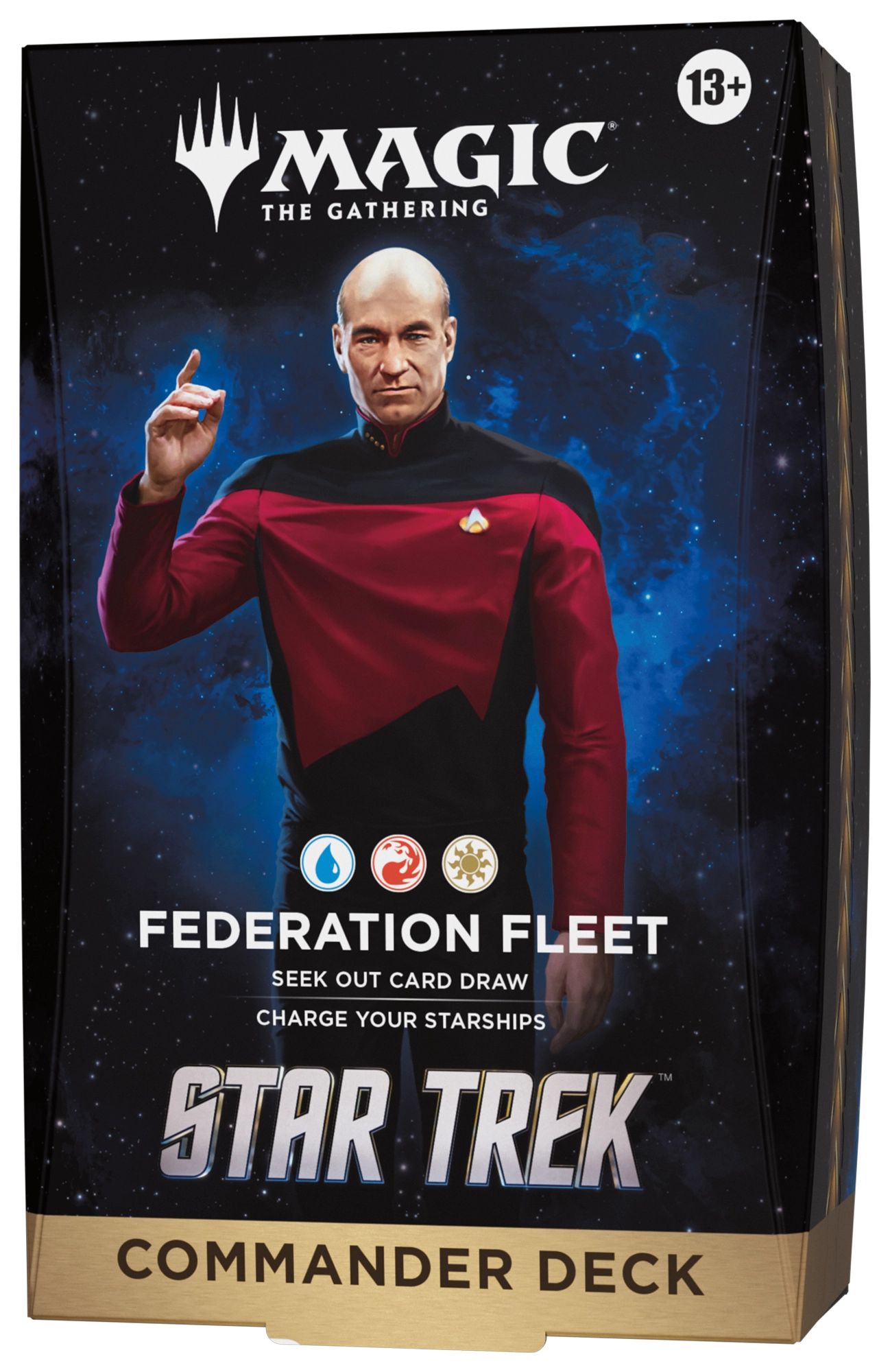
| Deck and colors | Face commander | Alternate commander | Starting preference |
|---|---|---|---|
| Federation Fleet · white, blue, red | Jean-Luc Picard, Luminary | Captain Janeway, Endgame | Extra draws and Spacecraft |
| Landing Party · green, white, blue | Commander Spock | Captain Kirk, Boldly Going | Differently named lands |
| Klingon Fury · red, white, black | Worf, Defiant Commander | Kor, Cause of Vengeance | Attack several opponents |
| We Are the Borg · white, blue, black | The Borg Queen | Locutus of Borg | Artifacts and assimilation |
- Pick Klingon Fury if declaring attacks is the part of Commander you enjoy. Pick Landing Party if you would rather grow a land-based engine. Federation Fleet suits repeated draws and ships; We Are the Borg suits building an artifact army from your own resources and opposing creatures.
- Those are playstyle recommendations, not a strongest-deck ranking. A deck that suits your group is a better starting purchase than a commander whose routine you dislike. The full lists are linked below so you can inspect your choice before ordering.
Extra draws and ships
Federation Fleet: Picard or Janeway
- Picard rewards your second draw in a turn through seek out: put a +1/+1 counter on up to one other creature and two charge counters on up to one Spacecraft. Another historic permanent you control entering with mana value three or greater also draws a card. Historic means an artifact, legendary card or Saga.
- For Picard, think about when you can draw again. Your normal draw starts the count on your own turn. An extra draw can reach the second-card trigger, while two draws during an opponent’s turn can give you another opportunity. Janeway instead draws a card and makes a 1/1 Officer when one or more of your Officers deal combat damage to a player. Several Officers hitting the same player at once give one trigger; hitting different players can give more.
- Station is a separate commitment: the creature you tap to charge a ship may be unavailable to attack or block afterward. Build your turn around the ship you want online instead of tapping every creature automatically.
- Read the complete Federation Fleet list and the Station and second-draw examples before choosing your opening sequence.
Explore new lands
Landing Party: Spock or Kirk
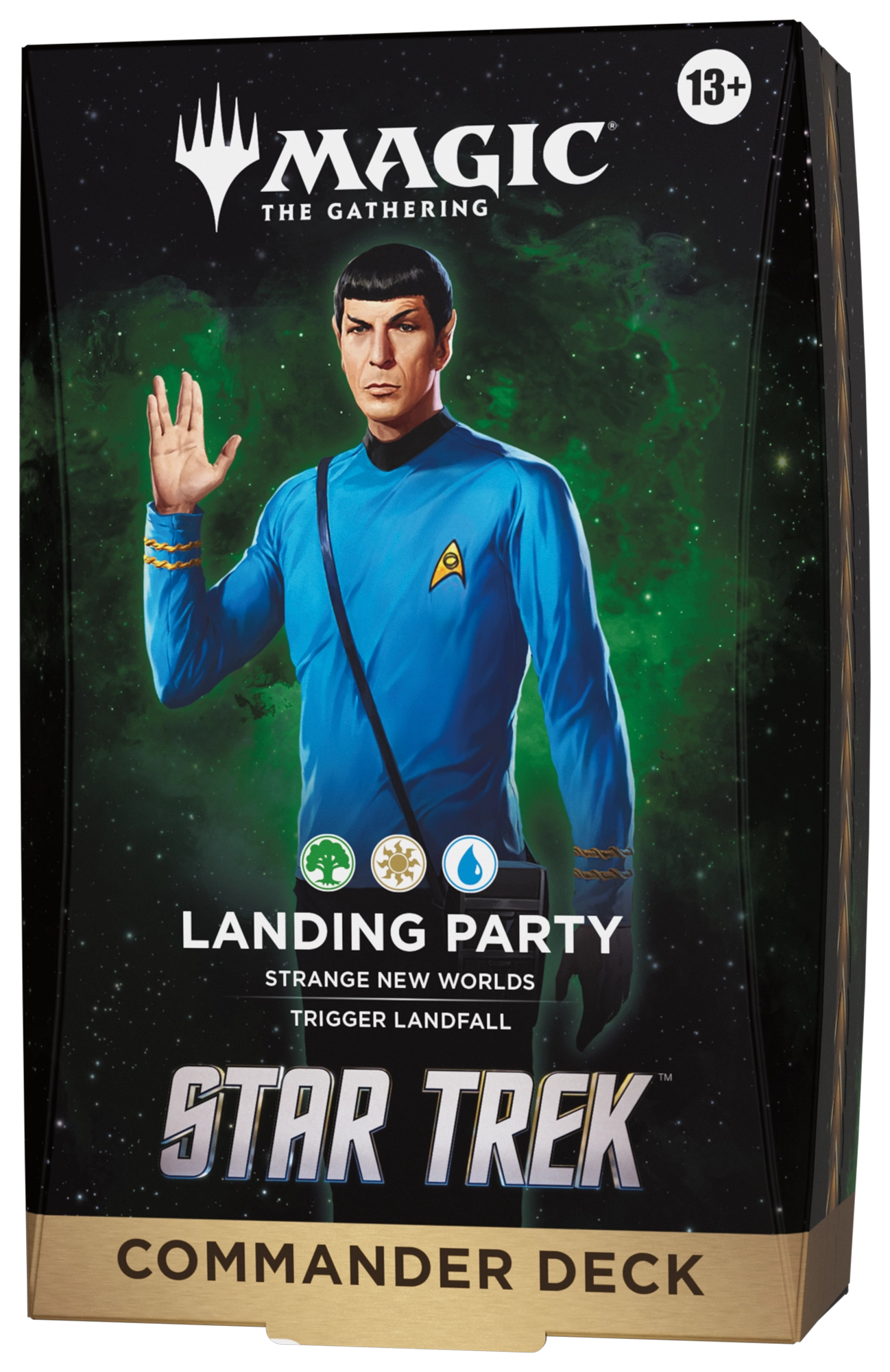
- Spock reveals your top card when he enters or attacks. You may cast it without paying its mana cost if its mana value is no greater than your number of differently named lands, or put it onto the battlefield tapped if it is a land. If the card stays on top, you draw it. A new land name expands what Spock can cast; another copy of a land you already control does not.
- Kirk gives your Spacecraft creatures +3/+3. When he enters or attacks, he can find a basic land or a card named Starship Enterprise in your library and/or graveyard and put it into your hand. That is access to the next resource, not a free Enterprise entering play.
- Keep the actual list handy while learning it. Two cards that both produce green mana can have different names, costs and drawbacks; treating every land as interchangeable hides the reason to choose Spock.
- The complete Landing Party list lets you compare its lands and spells before deciding whether you want to build further around Spock or Kirk.
Plan your attacks
Klingon Fury: Worf or Kor
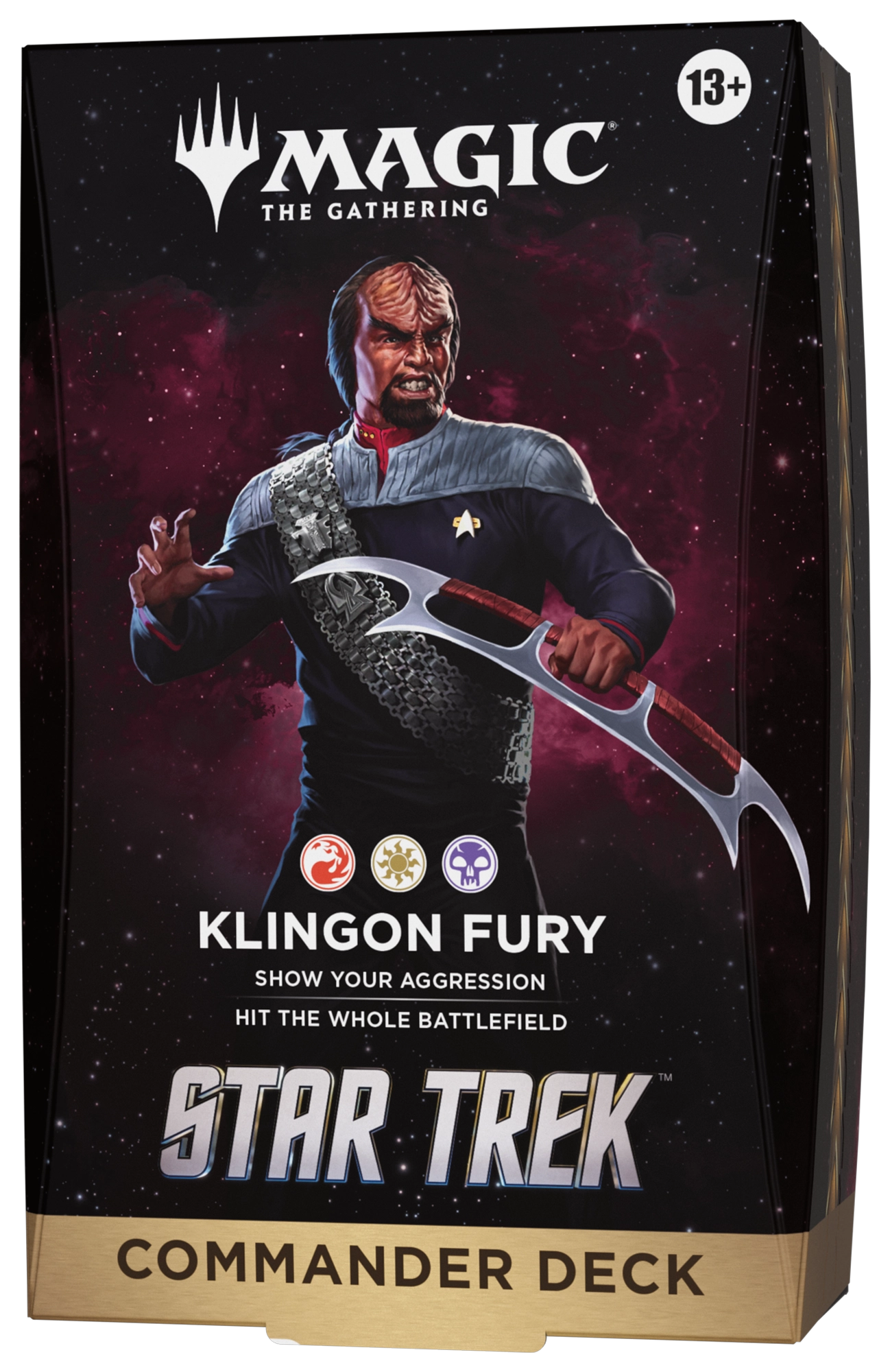
- Worf makes a 2/1 Warrior with haste when he enters. Whenever you attack, battlefront exiles cards from your library equal to the opponents you attacked this turn, and you may play those cards until the end of your next turn. Worf does not have to attack himself. You still pay the cards’ costs and follow normal play timing.
- Battlefront counts opponents you actually declared attackers against. A second combat can add a new opponent; attacking the same player twice doesn’t make that player count twice. Creatures put onto the battlefield attacking don’t add an opponent to that count.
- For example, declaring attacks against two different opponents gives a count of two. Sending three attackers at one opponent gives a count of one. Kor instead lets you sacrifice another creature whenever you attack. If you do, draw a card and give your Klingons and Warriors +2/+2 until end of turn. A creature with both types gets that bonus once.
- Use the full Klingon Fury list and Wizards’ battlefront explanation for the exact cards and timing.
Build the Collective
Borg Commander Deck: Queen or Locutus
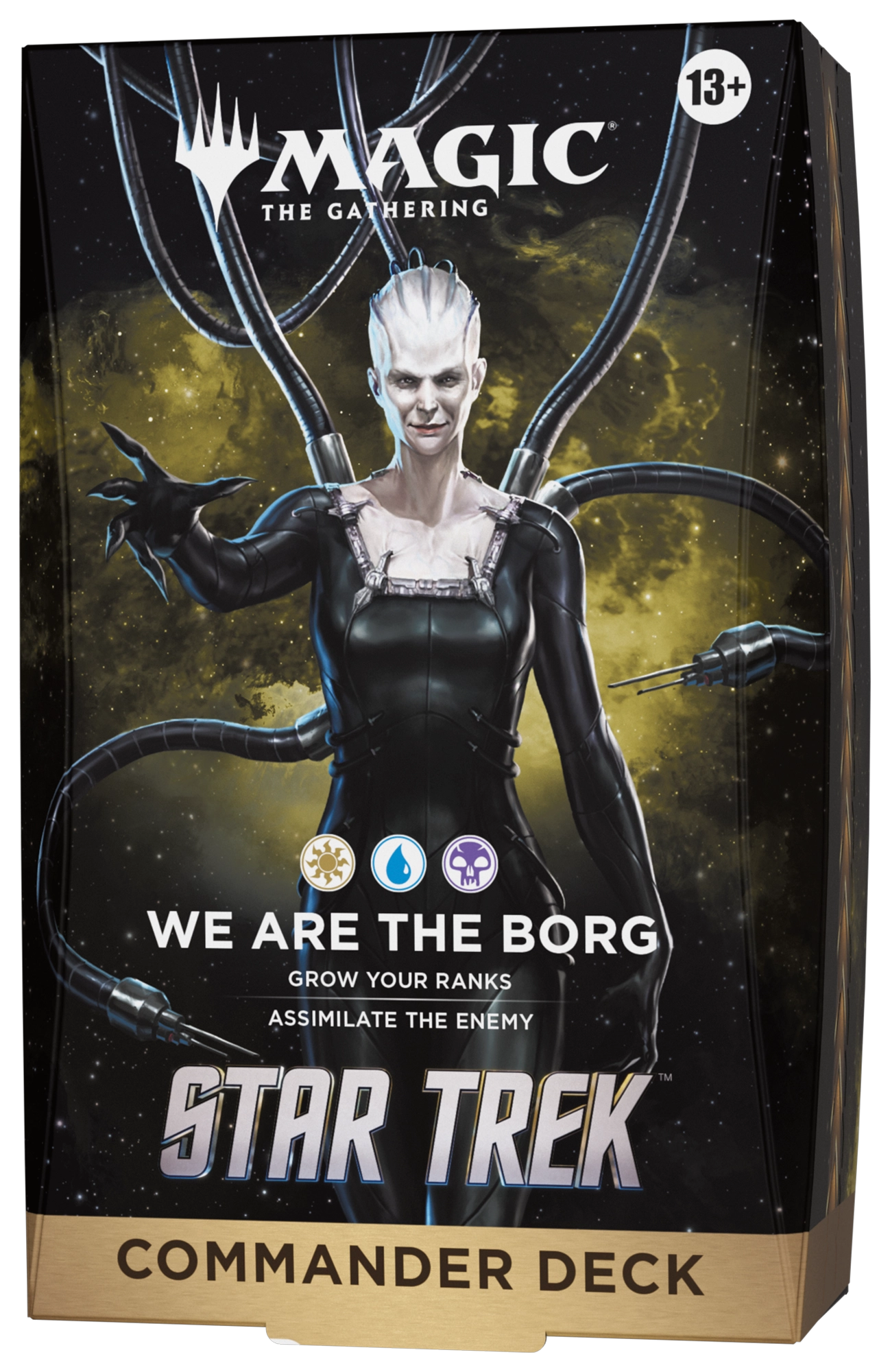
- The Borg Queen gives your artifact creatures +2/+2. When she enters or attacks, a target opponent exiles cards from the top of their library until they exile a creature, which you assimilate. The remaining exiled cards go to the bottom of that library in a random order. Her trigger takes a creature from the library, not the graveyard.
- Assimilate puts a creature card from another zone onto the battlefield under your control with a +1/+1 counter. It becomes a Borg artifact creature and loses its other creature types. Other card types and noncreature subtypes can remain.
- Keep the card’s owner clear when borrowing physical cards. Use a distinct area or marker and return the right cards after the game. This is especially useful when several players use similar sleeves.
- Check the complete We Are the Borg list before planning upgrades. Locutus has lifelink and gives your artifact creatures a combat-damage trigger that makes a 1/1 Borg artifact creature when they hit a player. Choose the Queen for the larger army and library assimilation, or Locutus for turning successful hits into more bodies.
Choose the finish
Regular vs Collector’s Edition Commander Decks
| Contents | Regular deck | Collector’s Edition |
|---|---|---|
| Playable deck | 100 cards | Same 100-card deck |
| Finish | Traditional foil face commander; 99 nonfoil cards | All 100 cards in Surge Foil |
| Tokens | 10 double-sided nonfoil tokens | 10 double-sided tokens, Surge Foil on one side |
| Other contents | Reference card and deck box | Reference card and deck box |
- Choose the regular deck when playing the list is your goal. The Collector’s Edition changes the finish, rather than adding a different strategy or extra playable cards. Pay the premium only if that finish is part of what you want.
- Each list totals 100 cards, including its commander. The 10 tokens are additional contents; they don’t turn the playable list into a 110-card deck.
- A preorder price is not the same thing as a confirmed delivery date. The general release is November 13, 2026, but WPN warns that Commander decks in North America may arrive afterward. Ask your seller about your exact edition and region before promising a release-night game.
Before your first game
Star Trek Commander Preparation Checklist
- Choose the crew first, then read both potential commanders. You can learn the printed list before deciding whether it needs upgrades.
- Talk to your group about the experience you want: divided attacks, repeated draws, a land engine or an artifact army. In particular, explain borrowed-card handling before playing Borg.
- Separate deck choice from purchase logistics. The Star Trek product guide covers other sealed formats and regional delays; a booster product doesn’t replace a ready-to-play Commander deck.
- For exact trigger and cost examples, keep the Star Trek rules guide beside your decklist. These recommendations are based on the revealed lists and rules, without a playtesting or win-rate claim.
- Sources checked October 29, 2026: Wizards’ four complete decklists, official mechanics and WPN regional delays. For abilities, read the printed commanders in the official card gallery. Prices and present stock are not assessed here.