

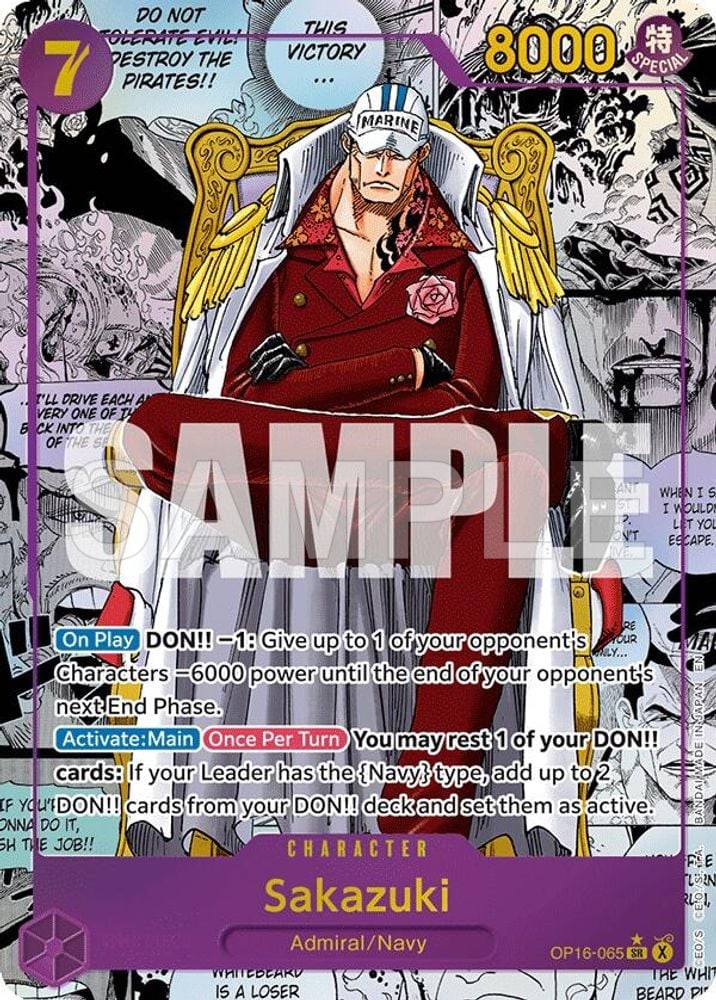
 Sakazuki (Manga)$1,140.40
OP-16 The Time of Battle value guide
Is OP-16: The Time of Battle Worth It?
OP-16 has three Manga Rares worth more than $1,000 each, which makes the set look awfully tempting. The harder question is what a normal opening looks like. We ran the pack, box, and case numbers three ways and counted every major foil and parallel treatment we could price.
Shop OP-16 booster boxesTCGplayer affiliate linkTrack the OP-16 box priceTCG Spikes tracker coming soon
Sakazuki (Manga)$1,140.40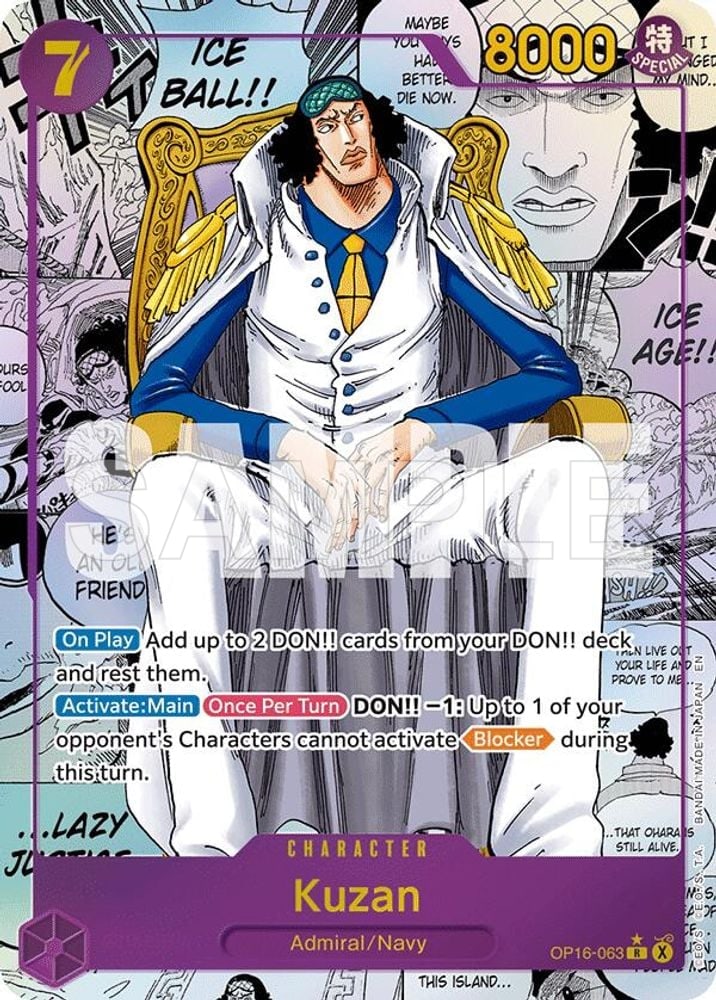 Kuzan (Manga)$1,133.22
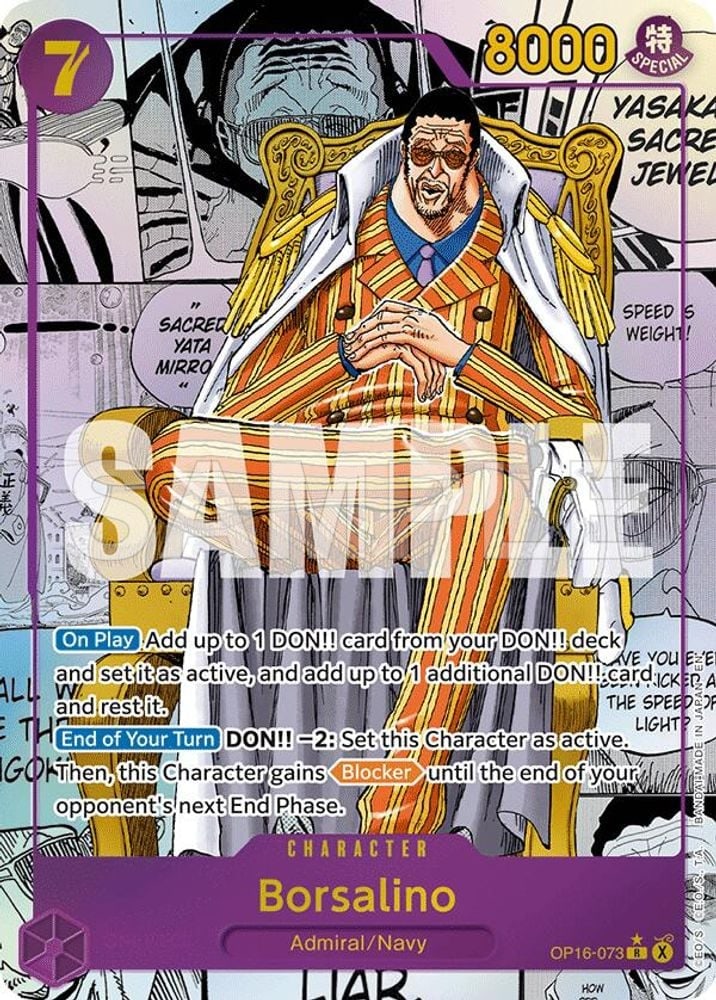 Borsalino (Manga)$1,043.28
The short answer
Is OP-16 Worth It?
Let's start with the number that matters. An OP-16 box was $208.46 on September 5, 2026. Our three opening estimates come to $121.31, $155.08, and $184.76. Even the most favorable version misses the box price.
Low estimate$121.31Lower published rate for each supported tier
Medium estimate$155.08Central named-source assumptions
High estimate$184.76Higher published rate for each supported tier
How much should you trust the totals? The checklist, treatments, and dated prices are the solid part. Pull rates are not. Bandai hasn't published OP-16 odds, and the public community data isn't large enough to turn any one estimate into an official EV.
Would we open a box for value at $208.46? No. The high estimate still comes up short before fees or the pile of cheaper cards that may take time to sell. A pack is easier to justify as a fun open. A case only makes sense if you already want twelve boxes and understand how much of the result rests on community pull rates.
Pack, box, and case
OP-16 Booster Pack, Box, and Case Prices
| Product | Market snapshot | Configuration | Comparison |
|---|---|---|---|
| Booster pack | $7.77 | 1 pack | View exact pack listings |
| Booster box | $208.46 | 24 packs | $8.69 per pack; view box listings |
| Booster case | $2,389.63 | 12 boxes | $199.14 per box; view case listings |
| Twenty-four loose packs | $186.48 | Arithmetic comparison | $21.98 less than the box |
| Twelve individual boxes | $2,501.52 | Arithmetic comparison | $111.89 more than the sealed case |
The first oddity is that the box isn't the cheapest way to buy 24 packs. At the tracked prices, 24 loose packs cost $186.48, which is $21.98 less than the box. Loose packs come with a different risk, though. They may be leftovers from a box or case after the big hits were found.
The case price works out to $199.14 per box, or $8.30 per pack. That saves $111.89, about 4.5%, compared with buying twelve boxes separately. It's a real discount. You still have to spend nearly $2,389.63 to get it.
Published odds
OP-16 Pull Rates and Odds
Here is the problem with any exact OP-16 EV claim. Bandai tells us there are 12 cards in a pack, 24 packs in a box, and 126+1 card types in the set. It names the rarity classes. It does not tell us how often Manga Rares, SP cards, parallel SECs, or the other premium treatments appear.
| Claim | Status | How this guide uses it |
|---|---|---|
| 12 cards per pack and $4.99 MSRP | Publisher supplied | Product fact |
| 24 packs per box and 12 boxes per case | Product configuration | Unit arithmetic |
| Manga around 1 per 36 boxes | Community estimate | Medium source input, not a guarantee |
| Two ordinary alternate arts per box | Community estimate | Medium and high source input |
| Any exact pull probability | Not published by Bandai | Never presented as official |
So where do the rates come from? OnePiece Terminal says it compiles community case openings, but its OP-16 page doesn't show a raw case-by-case dataset or sample count. Cambridge TCG reviews the available figures without publishing a raw opening dataset of its own. TCG Comp labels its 1,400-pack OP-16 entry as demo data. TCGtalk documents openings, but mixes English and Japanese product information and includes factual inconsistencies.
| Input | Confidence | Reason |
|---|---|---|
| Pack, box, and case configuration | High | Publisher and product listings |
| Exact treatment checklist | High | 159 separately identified products |
| September 5 market prices | High for the dated snapshot | Exact TCGplayer products |
| Community pull rates | Low to medium | No official odds or public raw aggregate |
| Scenario value totals | Low to medium | Depend directly on community rates |
| Negative-value verdict | Medium | Remains negative across the source envelope below |
That doesn't make the exercise useless. It means $114.15 and $151.11 are outputs from particular assumptions, not the one true OP-16 EV. A range is more useful here than false precision.
Low, medium, and high
OP-16 Low, Medium, and High Estimates
| Estimate | How rates were selected | All quoted cards | Cards at least $4.00 |
|---|---|---|---|
| Low | Lower published rate for each supported tier | $121.31 | $84.89 |
| Medium | Central named-source rate for each tier | $155.08 | $118.12 |
| High | Higher published rate for each supported tier | $184.76 | $145.36 |
The low and high columns are not arbitrary discounts or premiums. We only change a card tier when OnePiece Terminal or Cambridge TCG gives us a different usable English rate. Manga Rares, SP cards, base SECs, Super Rares, and Rares move across the range. Tiers without a second rate stay put.
There is still a modeling wrinkle. The table values each tier separately, while real case collation may cause one premium hit to replace another. TCG Comp's demo figures and TCGtalk's inconsistent claims stay in the source discussion, but neither one sets an endpoint.
Foils and treatments
OP-16 Foils and Card Treatments
Yes, the expensive versions are in the math. We priced every Manga Rare, SP card, Treasure Rare, alternate-art SEC, regular alternate art, Leader parallel, full-art card, base SEC, base Super Rare, and Gold DON!! as its own product.
One Piece doesn't have a separate Collector Booster doing the premium-card work. Those foils and parallels are already in the normal OP-16 booster.
| Card class | Low rate | Medium rate | High rate | Medium gross value |
|---|---|---|---|---|
| Manga rares | Cambridge low: 1 per 72 boxes | Terminal: 1 per 36 boxes | Cambridge high: 1 per 24 boxes | $30.71 |
| SP cards | Cambridge low: 1 per 12 boxes | Terminal: 1 per 6 boxes | Cambridge high: 1 per 6 boxes | $27.81 |
| Treasure Rare | Held at 1 per 12 boxes | Terminal: 1 per 12 boxes | Held at 1 per 12 boxes | $1.80 |
| Alternate-art SEC | Held at 1 per 6 boxes | Terminal: 1 per 6 boxes | Held at 1 per 6 boxes | $5.78 |
| Alternate art, full art, and Leader parallels | Terminal and Cambridge: 2 per box | Terminal and Cambridge: 2 per box | Terminal and Cambridge: 2 per box | $40.38 |
| Base SEC | Terminal: 1 per 3 boxes | Cambridge low: 1 per 2 boxes | Cambridge high: 1 per box | $11.90 |
| Gold DON!! | Held at 1 per 6 boxes | Terminal: 1 per 6 boxes | Held at 1 per 6 boxes | $0.61 |
| Base Super Rares | Terminal and Cambridge low: 7 per box | Terminal and Cambridge low: 7 per box | Cambridge high: 9 per box | $8.48 |
| Base Leaders | Held at 5 per box | Terminal: 5 per box | Held at 5 per box | $0.63 |
| Base Rares | Cambridge: about 24 per box | Terminal: 26 per box | Terminal: 26 per box | $7.13 |
| Commons and Uncommons | Held at baseline | Held at baseline | Held at baseline | $19.86 |
We also removed the old blanket 25% low adjustment and 40% high adjustment. Every change in the table now comes from a named rate. OnePiece Terminal's $114.15 result is still useful as a reproducible reference with its $4.00 selling floor. It is not our low estimate, and we don't treat it as a verified factory EV.
Booster pack
Is an OP-16 Booster Pack Worth It?
A $7.77 pack is the easiest OP-16 purchase to justify because the downside stops at $7.77. Spread the three box estimates over 24 packs and you get $5.05, $6.46, and $7.70 per pack.
Those are box-rate allocations, not proven loose-pack EVs. Selection risk matters here too. If you want to crack one pack, the price is reasonable for the experience. Buying packs until a hit pays you back is a much tougher plan to defend.
Booster box
Is an OP-16 Booster Box Worth It?
| Source-bound scenario | All quoted cards | Cards at least $4.00 | Gap to box |
|---|---|---|---|
| Low | $121.31 | $84.89 | $87.15 |
| Medium | $155.08 | $118.12 | $53.38 |
| High | $184.76 | $145.36 | $23.70 |
The box is where the answer gets easy. Even the high estimate is $23.70 below the $208.46 price. That estimate already counts the base foils and premium treatments.
It also uses gross card value. Fees, postage, condition discounts, and cards that never sell only widen the gap. We don't see a financial case for opening a box at this price.
Booster case
Is an OP-16 Booster Case Worth It?
| Case comparison | All quoted cards | Cards at least $4.00 | Share of case price |
|---|---|---|---|
| Case market price | $2,389.63 | Not applicable | 100.0% |
| Low rate scenario across 12 boxes | $1,455.74 | $1,018.68 | 60.9% |
| Medium rate scenario across 12 boxes | $1,861.02 | $1,417.38 | 77.9% |
| High rate scenario across 12 boxes | $2,217.09 | $1,744.38 | 92.8% |
A case gets the box cost down to $199.14, the best sealed unit price we found. It also puts $2,389.63 into one opening decision.
Even twelve high-estimate boxes add up to $2,217.09, still $172.54 below the case price before selling costs. The discount helps, but not enough to flip the opening math. A case fits a group break or a collector who wants sealed product. It doesn't fit a value-first buyer.
The cards driving demand
Most Valuable Cards in OP-16
Sakazuki (Manga)$1,140.40Shop this exact printingKuzan (Manga)$1,133.22Shop this exact printingBorsalino (Manga)$1,043.28Shop this exact printing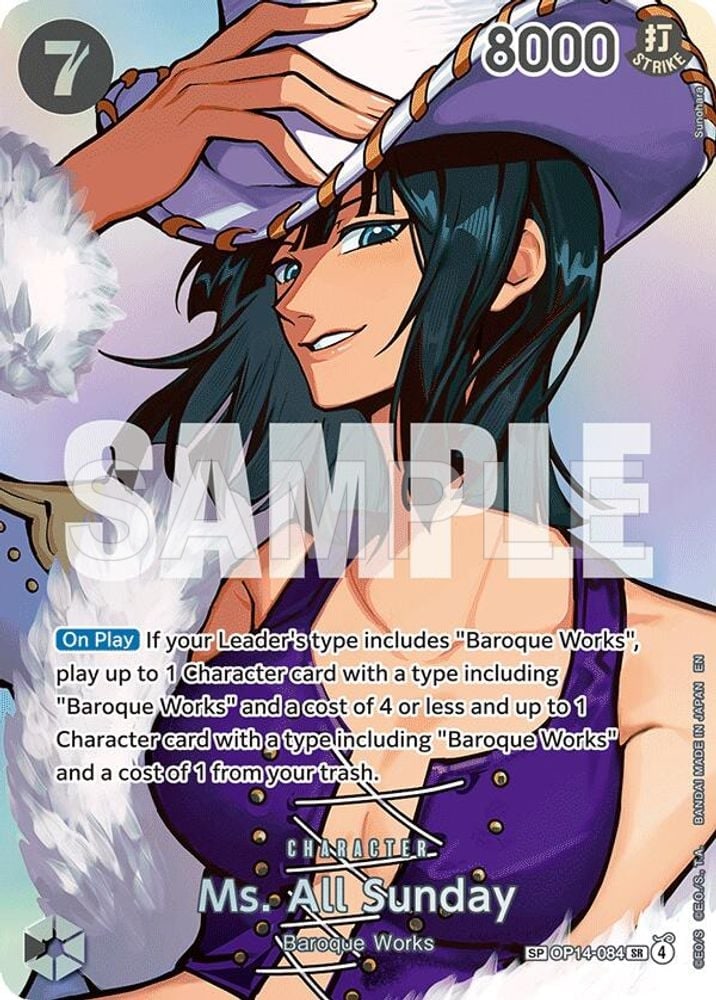 Ms. All Sunday (SP)$538.19Shop this exact printing
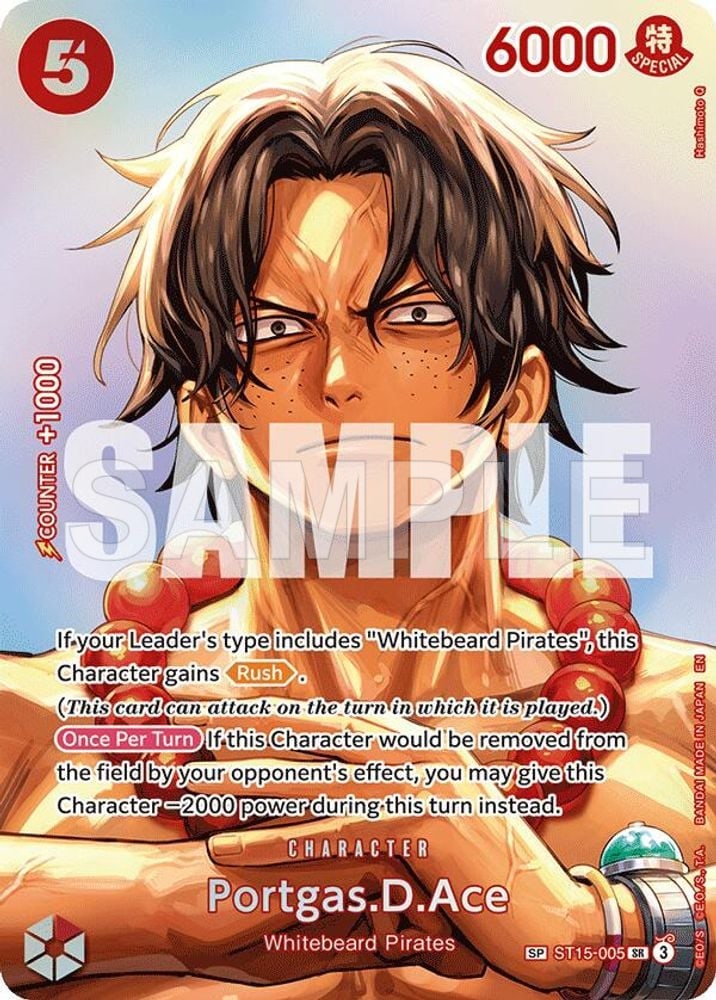 Portgas.D.Ace (SP)$158.29Shop this exact printing
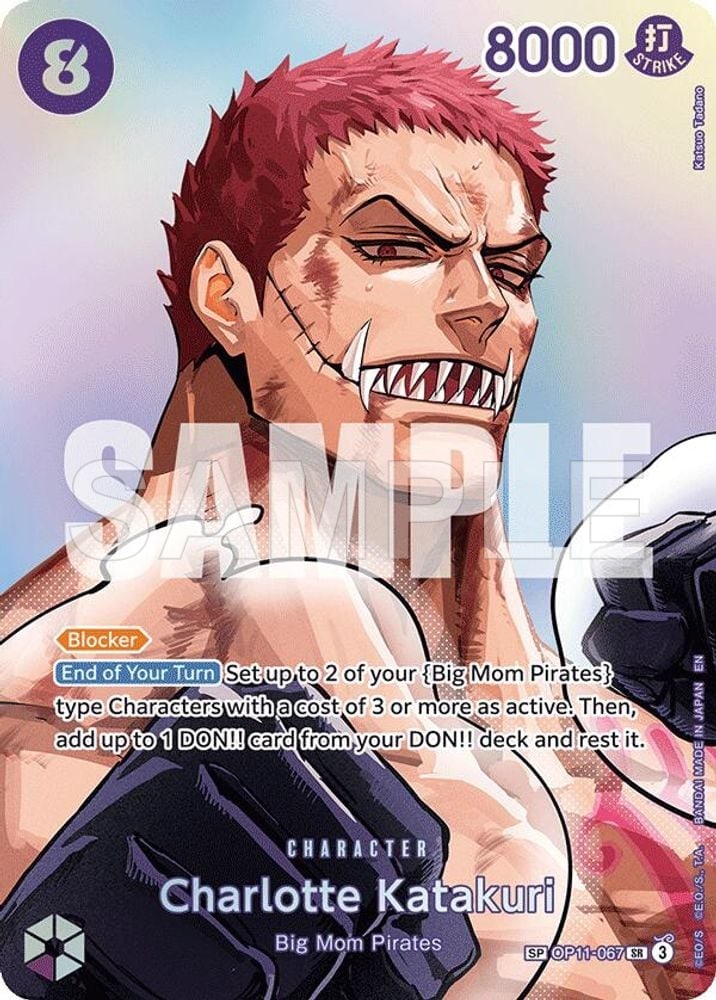 Charlotte Katakuri (SP)$102.28Shop this exact printing
If you are wondering why OP-16 boxes cost this much, start with the Manga Rares. The three cards total $3,316.90 in this snapshot, and the SP tier adds another group of real prizes.
The chase lineup is not fake. It is simply top-heavy. Most openings are built from much cheaper parallels and base foils, which is why the dream pulls and the box verdict can point in opposite directions.
Planned TCG Spikes connections
OP-16 Singles and Sealed Products
OP-16 set price pageTCG Spikes tracker coming soonOne Piece singles hubTCG Spikes tracker coming soonOne Piece sealed hubTCG Spikes tracker coming soonOP-16 booster pack trackerTCG Spikes tracker coming soonOP-16 booster box trackerTCG Spikes tracker coming soonOP-16 booster case trackerTCG Spikes tracker coming soon
Method and limits
OP-16 Opening Math
- We used the September 5, 2026 TCGplayer market snapshot in the local One Piece catalog for card and sealed prices.
- Each card class uses its exact printing pool and a stated per-box pull rate.
- The low estimate takes the lower named-source rate, the medium estimate takes the central rate, and the high estimate takes the higher rate shown in the treatment table.
- When the sources did not give us a second usable English rate, we left that tier alone. This applies to Treasure Rare, alternate-art SEC, ordinary alternate art, Gold DON!!, base Leaders, and commons and uncommons.
- We do not use the old 0.75 and 1.40 blanket multipliers.
- TCG Comp's demo data and TCGtalk's inconsistent claims are included for context, not calculation.
- The all-card columns count every quoted market price. The sellable columns count only products worth at least $4.00.
- Parallel cards use their own exact product price. There is no generic foil multiplier.
- The estimates do not model correlations or one hit replacing another within a case.
- More community openings can improve an estimate. They cannot make the rate official unless Bandai publishes it.
Sources
OP-16 Data Sources
Bandai gives us the product facts and checklist. TCGplayer and TCGCSV supply the dated prices. The pull-rate side is community work, so we checked several sources instead of letting one table carry the whole article.
OnePiece Terminal provides the reproducible baseline. Cambridge TCG gives us the alternate published rates used for the low and high estimates. InkSight is useful for understanding the limits of the public evidence. TCG Comp, TCGtalk, and the recorded case opening are linked for context, but they do not set our calculation.
- Bandai: The Time of Battle product details
- OnePiece Terminal: OP-16 prices, community rates, and EV model
- OnePiece Terminal: published methodology and $4 selling floor
- InkSight: OP-16 pull-rate provenance review
- InkSight: OP-16 50-day market report
- Cambridge TCG: publisher facts and community estimates
- TCGtalk: documented OP-16 box and case opening summary
- TCG Comp: separately estimated OP-16 pull rates
- Beckett: OP-16 checklist and sealed configuration
- TCGplayer: exact OP-16 booster pack product
- TCGplayer: exact OP-16 booster box product
- TCGplayer: exact OP-16 booster case product
- StrawHatBrother: recorded OP-16 case opening
- TCGCSV: TCGplayer market data
Prices are snapshots, not offers. TCG Spikes may earn a commission from qualifying retailer purchases. One Piece card artwork belongs to its respective creators and rights holders.